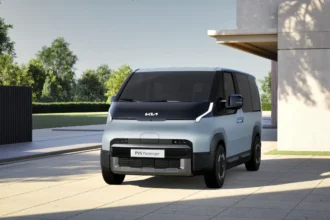
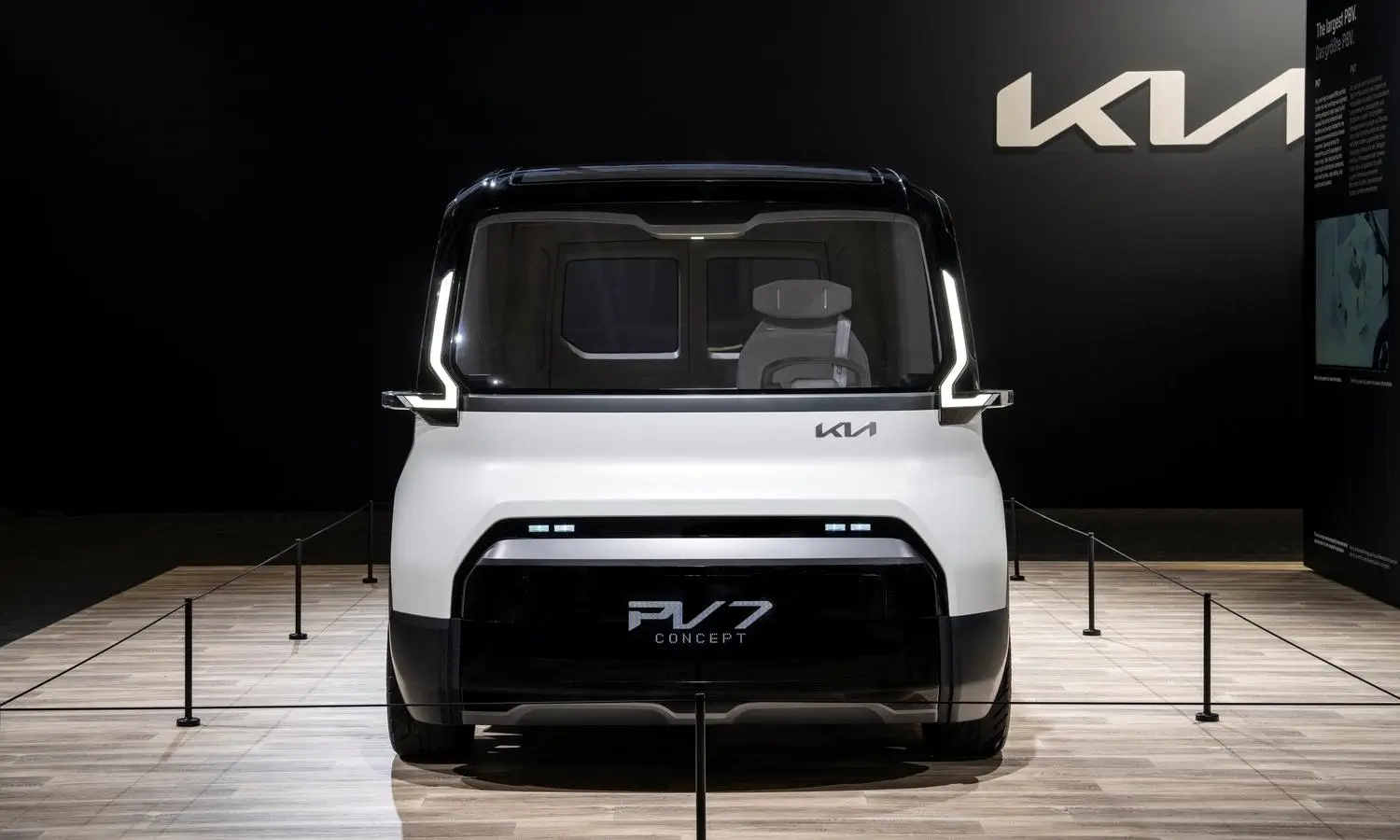
Kia is rapidly expanding beyond traditional SUVs and sedans, and the Kia Concept PV7 represents one of the clearest signs of that transformation. Unveiled as part of Kia’s Platform Beyond Vehicle (PBV) strategy, the PV7 is envisioned as a large, fully electric van designed to serve businesses, passenger transport operators, and even lifestyle users who need exceptional interior space.
Unlike conventional vans that are built around a single purpose, this concept emphasizes adaptability. Its modular architecture allows the vehicle to be configured for cargo delivery, airport shuttles, ride-sharing fleets, mobile offices, or recreational travel. In many ways, it previews how commercial mobility could evolve over the next decade.
A New Flagship for Kia’s PBV Family
Within Kia’s emerging PBV lineup, the PV7 sits above the smaller PV5 and is expected to become the flagship commercial model. The concept stretches approximately 5,270 mm in length and stands about 2,120 mm tall, giving it a commanding presence and significantly more interior volume than most passenger-focused electric vehicles.
What makes it particularly interesting is that the extra size is not just for show. Kia designed the vehicle to maximize usable space while maintaining a relatively low floor height, making loading and unloading easier for businesses that handle bulky goods throughout the day.
Design That Prioritizes Function
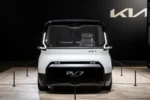
The exterior styling follows Kia’s latest design language, but with a stronger emphasis on practicality. The front end features clean surfaces, vertical lighting elements, and a futuristic appearance that helps distinguish it from traditional commercial vans.
Large sliding doors and a boxy roofline maximize access and headroom. Rather than chasing sporty proportions, the design focuses on efficiency and interior usability. That approach makes sense for a vehicle that may spend long hours transporting passengers, parcels, or equipment.
From a design perspective, I find the PV7 particularly compelling because it avoids looking like a conventional delivery van and instead feels closer to a purpose-built electric mobility platform.
Built on Kia’s Scalable Electric Platform
The concept is based on Kia’s E-GMP.S skateboard architecture, a scalable platform developed specifically for PBVs. This setup places the battery pack beneath the floor and allows different body styles to be mounted on the same underlying structure.
That flexibility is one of the vehicle’s biggest advantages. Operators could theoretically choose configurations such as:
- Large cargo van
- Passenger shuttle
- Wheelchair-accessible transport
- Mobile office
- Camper conversion
- Specialized service vehicle
Instead of developing separate vehicles for each use case, Kia aims to create a common electric platform that can support multiple business models.
Expected Performance and Charging
While final production specifications have not been fully confirmed, Kia has indicated that the PV7 will support fast DC charging and may offer all-wheel-drive capability in certain configurations.
Industry expectations point toward competitive battery capacities and driving ranges suitable for commercial use. The focus appears to be less about outright performance and more about minimizing downtime and maximizing operational efficiency.
For fleet operators, charging speed often matters more than acceleration. A vehicle that can quickly return to service after a charging stop can significantly improve daily productivity.
Business-Focused Technology
One of the most important aspects of the PV7 is its software ecosystem. Kia has highlighted features aimed directly at commercial customers, including:
- Fleet management tools
- Route optimization
- Remote vehicle monitoring
- Predictive maintenance capabilities
- Digital logistics integration
The cabin is also expected to incorporate configurable storage systems and rail-based cargo solutions that make loading more ergonomic.
Another standout feature is Vehicle-to-Load (V2L) functionality. This allows the van to supply electricity to external devices, tools, or equipment. Contractors, event organizers, and mobile businesses could potentially use the vehicle as a portable power source.
How It Compares With the Smaller PV5
| Feature | Kia Concept PV7 | Kia Concept PV5 |
|---|---|---|
| Vehicle Segment | Large electric PBV | Mid-size electric PBV |
| Primary Purpose | Large-scale cargo transport, passenger shuttle, and commercial operations | Urban deliveries, passenger transport, and small business use |
| Overall Length | Approximately 5,270 mm | Smaller and more compact than the PV7 |
| Interior Space | Largest cabin and cargo capacity in Kia’s PBV lineup | Spacious but designed for medium-capacity needs |
| Cargo Capacity | Optimized for bulky and oversized loads | Ideal for everyday commercial deliveries |
| Passenger Configurations | Multiple seating layouts for shuttles and mobility services | Flexible seating for smaller groups |
| Platform | Kia E-GMP.S modular skateboard platform | Kia E-GMP.S modular skateboard platform |
| Modular Body Options | Cargo van, passenger van, camper, mobile office, and specialty vehicle conversions | Cargo van, passenger van, and specialized commercial configurations |
| Vehicle-to-Load (V2L) | Yes | Yes |
| Target Customers | Logistics companies, fleet operators, shuttle services, and large businesses | Small businesses, delivery services, and urban fleet operators |
| Expected Market Position | Flagship model in Kia’s PBV lineup | Entry-level to mid-range PBV offering |
Commercial Applications Across Multiple Industries
A regional delivery company transporting furniture, appliances, and oversized parcels could benefit from the PV7 expansive cargo area and low loading height, reducing the need for multiple trips. Likewise, an airport shuttle operator could configure the same platform with additional passenger seating and dedicated luggage space. This versatility demonstrates how one electric vehicle can efficiently support entirely different business operations.
What Makes It Different From Other Electric Vans?
Many electric vans simply replace a combustion engine with a battery. The PV7 takes a broader approach by treating the vehicle as a mobility platform rather than a single-purpose van.
Its combination of modular body architecture, commercial software integration, V2L capability, and high interior capacity creates a more versatile package than many current competitors. That flexibility could become increasingly valuable as businesses seek vehicles that can adapt to changing operational needs.
Expected Launch Timing
Kia has indicated that the PV7 is targeted for future production as part of its expanding PBV strategy. While exact regional availability may vary, the vehicle is expected to arrive after the initial rollout of the smaller PV5.
As the electric commercial market grows, the PV7 could become one of Kia’s most important business-oriented products globally.
Related: Kia PV5 Overview
Conclusion
The Kia Concept PV7 is more than a futuristic show vehicle. It provides a strong preview of how Kia intends to compete in the rapidly evolving electric commercial sector. With its large dimensions, modular design, business-focused technology, and flexible interior configurations, it aims to serve delivery companies, shuttle operators, mobile businesses, and lifestyle users alike.
If Kia delivers production-ready versions with competitive range, charging speeds, and pricing, the PV7 could emerge as one of the most versatile electric vans in the market and a major step forward for Kia’s PBV ambitions.
FAQs
What is the Kia Concept PV7?
It is Kia’s large fully electric Platform Beyond Vehicle (PBV) concept designed for cargo, passenger transport, and other modular commercial applications.
How big is the PV7?
The concept measures approximately 5,270 mm long and 2,120 mm tall, making it the largest vehicle in Kia’s current PBV lineup.
Will the PV7 be fully electric?
Yes. It is designed as a battery-electric vehicle built on Kia’s scalable E-GMP.S platform.
Can the PV7 be used for passengers and cargo?
Yes. One of its key features is modularity, allowing different configurations for cargo transport, passenger shuttles, camper conversions, and specialized business uses.
Does it support Vehicle-to-Load (V2L)?
Yes. The concept includes V2L capability, enabling the vehicle to power external devices and equipment.
When will the Kia PV7 launch?
Kia has announced it as part of its future PBV strategy, with production expected after the rollout of earlier PBV models such as the PV5.