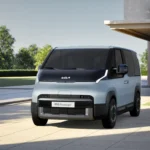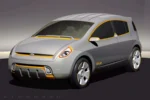

As cities become more crowded and delivery demands continue to rise, automakers are searching for innovative ways to solve urban transportation challenges. Kia’s answer is the PV1 Concept, a futuristic electric Purpose-Built Vehicle (PBV) designed specifically for highly congested environments where traditional vehicles often struggle.
Rather than focusing on passenger comfort alone, this compact concept reimagines how goods, services, and people move through modern cities. With advanced maneuverability, modular architecture, intelligent software integration, and an ultra-compact footprint, the PV1 demonstrates how Kia envisions the next generation of urban mobility.
This concept is more than a small electric vehicle. It serves as a glimpse into a transportation ecosystem where delivery services, ride-sharing operations, and mobile businesses can operate more efficiently than ever before.
What Is the Kia PV1 Concept?
The Kia PV1 is the smallest member of Kia’s expanding Purpose-Built Vehicle family. Developed as an all-electric mobility solution, it targets applications such as last-mile deliveries, urban logistics, micro-mobility services, autonomous transportation, and mobile commercial operations.
Unlike conventional vans or compact cars, the PV1 is engineered from the ground up for city environments. Its compact dimensions allow it to access narrow streets, crowded districts, and areas where larger commercial vehicles face significant limitations.
The vehicle forms part of Kia’s broader PBV strategy, which aims to create adaptable transportation platforms capable of serving different industries through modular body configurations and software-defined functionality.
Designed for Cities That Never Slow Down
One of the most impressive aspects of the PV1 is its extraordinary maneuverability.
Urban congestion remains one of the biggest challenges for logistics providers and mobility operators. Delivering packages, transporting passengers, or setting up temporary business locations becomes increasingly difficult when streets are crowded and parking space is limited.
To address this issue, Kia equipped the concept with independent steering functionality on all four wheels. This advanced setup enables movement patterns that would be impossible for traditional vehicles.
The PV1 can:
- Rotate almost in place
- Move diagonally
- Perform right-angle maneuvers
- Navigate tight alleyways with ease
- Access restricted urban spaces efficiently
These capabilities could dramatically reduce the time required to complete deliveries in dense city centers while improving operational efficiency for commercial fleets.
A Flexible Platform Built Around Business Needs
Adaptability sits at the heart of the vehicle’s design philosophy.
Instead of creating a single-purpose vehicle, Kia developed the concept as part of a modular ecosystem. Different body modules, cargo units, and service configurations can potentially be attached to suit various commercial applications.
For example, the same platform could be configured as:
- A parcel delivery vehicle
- A grocery transport solution
- A ride-hailing shuttle
- A mobile retail store
- A maintenance service vehicle
- An autonomous delivery unit
This flexibility allows businesses to maximize vehicle utilization while reducing fleet complexity.
As industries increasingly move toward customized mobility solutions, the ability to transform one platform into multiple business tools becomes a major competitive advantage.
Advanced Chassis Technology Enhances Practicality
Beyond its unique steering capabilities, the concept introduces innovative suspension technology designed to simplify loading and unloading operations.
The active electromagnetic suspension system allows the vehicle to adjust its ride height and tilt angle according to operational requirements.
For delivery companies handling hundreds of packages daily, even small improvements in loading efficiency can generate significant productivity gains.
Lowering the chassis during cargo transfer reduces lifting effort and speeds up the loading process. This seemingly simple feature could save countless hours across large commercial fleets operating in busy metropolitan areas.
Smart Software Takes Center Stage
Modern mobility is increasingly driven by software, and the PV1 embraces this reality.
The concept incorporates intelligent digital systems capable of supporting fleet operators through:
- Route optimization
- Predictive maintenance monitoring
- Vehicle diagnostics
- Fleet management integration
- Autonomous operation support
- Real-time logistics coordination
Artificial intelligence plays an important role in helping operators identify the most efficient routes while minimizing downtime through proactive maintenance recommendations.
As transportation becomes more connected, these software-driven capabilities may prove just as valuable as the vehicle’s hardware innovations.
How It Stacks Up Against Other Kia PBV Models
While the PV1 serves as the smallest member of Kia’s Purpose-Built Vehicle lineup, larger models focus on different operational needs.
| Feature | PV1 Concept | Mid-Size PBV Models | Large Commercial PBVs |
|---|---|---|---|
| Primary Purpose | Urban logistics | Mixed commercial use | High-capacity transport |
| Vehicle Size | Ultra-compact | Medium | Large |
| Maneuverability | Exceptional | High | Moderate |
| Cargo Capacity | Limited | Moderate | Extensive |
| City Navigation | Outstanding | Very Good | Challenging in tight areas |
| Parking Convenience | Excellent | Good | Limited |
| Last-Mile Delivery Suitability | Excellent | Good | Moderate |
| Narrow Alley Access | Excellent | Limited | Poor |
This positioning allows Kia to address multiple transportation challenges while maintaining a cohesive mobility ecosystem.
A Practical Example of Where It Could Shine
Imagine a major city where online shopping demand continues to increase.
A logistics company must deliver hundreds of packages daily across neighborhoods filled with narrow roads, limited parking spaces, and heavy traffic.
A traditional delivery van may spend considerable time searching for parking or navigating congested streets. The PV1, however, could maneuver through tight spaces, stop closer to delivery points, and complete routes more efficiently.
The result would be faster deliveries, reduced congestion, lower operating costs, and a better customer experience.
This scenario highlights why ultra-compact commercial EVs are becoming increasingly important as urban populations continue to grow.
Why the PV1 Matters Beyond Delivery Services
Although delivery applications receive most of the attention, the concept’s potential extends much further.
The integrated Vehicle-to-Load (V2L) capability allows the vehicle to power external equipment. This opens opportunities for:
- Mobile coffee shops
- Temporary retail kiosks
- Event support services
- Outdoor marketing activations
- Mobile repair stations
In many ways, the vehicle functions as a mobile business platform rather than simply a means of transportation.
That distinction represents one of the most interesting aspects of Kia’s future mobility strategy.
Personal Perspective
After reviewing numerous concept vehicles from various manufacturers over the years, the PV1 stands out because it addresses genuine urban transportation problems rather than focusing solely on futuristic styling or attention-grabbing technology.
Looking Toward the Future
The concept reflects a broader shift occurring throughout the automotive industry. Future vehicles are increasingly being designed around specific tasks instead of general-purpose transportation.
Kia recognizes that cities require specialized solutions capable of balancing efficiency, sustainability, flexibility, and connectivity.
By combining electric propulsion, modular design, advanced software, and exceptional maneuverability, the PV1 presents a compelling blueprint for how urban mobility could evolve over the next decade.
Related: Kia Pop Overview
Conclusion
The Kia PV1 Concept showcases an ambitious vision for the future of city transportation. Its compact dimensions, remarkable maneuverability, adaptable architecture, and intelligent software systems position it as a potentially transformative solution for urban logistics and mobility services.
Rather than simply creating another electric vehicle, Kia has developed a platform designed to solve real-world challenges faced by businesses operating in increasingly crowded cities. Whether supporting last-mile delivery networks, ride-sharing services, mobile retail operations, or future autonomous fleets, the concept demonstrates how purpose-built mobility can unlock new levels of efficiency.
If Kia successfully translates these innovations into production-ready vehicles, the PV1 could become an important milestone in the evolution of smart urban transportation.
FAQs
What is the Kia PV1 Concept?
The PV1 is an ultra-compact electric Purpose-Built Vehicle developed by Kia for urban logistics, delivery services, mobility solutions, and commercial operations in densely populated cities.
Is the PV1 a production vehicle?
No. It is currently a concept vehicle that showcases Kia’s future vision for specialized urban transportation and PBV development.
What makes the PV1 different from traditional delivery vans?
Its compact size, four-wheel independent steering system, modular architecture, and advanced maneuverability allow it to operate effectively in areas where conventional vans face limitations.
Can the PV1 support autonomous driving?
The concept has been designed with connected technologies and future autonomous mobility applications in mind, although final production specifications have not been announced.
What industries could benefit from the PV1?
Potential users include logistics companies, ride-sharing providers, retail businesses, delivery services, maintenance operators, and mobile service providers.
Does the PV1 support external power usage?
Yes. The concept incorporates Vehicle-to-Load functionality, allowing external devices and equipment to be powered directly from the vehicle.
Why is the PV1 important to Kia’s future strategy?
The vehicle represents Kia’s commitment to Purpose-Built Vehicles and software-driven mobility solutions, helping establish a flexible ecosystem tailored to the evolving needs of modern cities.