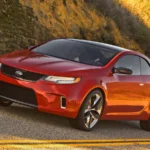
There are concept cars that exist purely to generate buzz at auto shows beautiful distractions that dissolve into automotive history without a trace. And then there’s the Kia Kue. Unveiled on a cold January morning in Detroit in 2007, this machine did something rare: it actually meant something. If you’ve ever stood next to a third-generation Kia Sportage and felt that immediate sense of aggression in the grille, in the sculpted flanks, in the way it locks eyes with you from across a parking lot, you owe a quiet debt to a concept most people have never heard of.
I’ve spent considerable time studying the evolution of Kia’s design timeline, and the Kue genuinely caught me off guard with how much of today’s production lineup traces directly back to this single concept vehicle.
What Exactly Was the Kia Kue?
On January 8, 2007, Kia Motors America unveiled the Kue crossover concept (internal designation KCD-3) at the North American International Auto Show in Detroit. But this wasn’t just a shiny object rolled out for photographs. The reveal served double duty as the official North American introduction of Peter Schreyer, the man Kia had poached from Volkswagen and Audi to completely reimagine what the brand could look like. That alone should tell you the Kue carried weight far beyond its fiberglass panels.
Designed at Kia’s California studio, the concept positioned itself as a performance crossover. A mid-size CUV that flatly refused to prioritize cargo space over driving excitement. Len Hunt, then Executive Vice President and COO of Kia Motors America, put it plainly: the Kue represented the “next phase of Kia’s brand evolution,” one that would instill pride and passion in customers through great design. At a time when Kia was still largely known for budget-friendly transportation, those were bold words backed by an even bolder machine.
It delivered. The Kue became the first Korean concept car to win a major international design award, taking home the prestigious Eyes on Design Award for Design Excellence at the 2007 Detroit show. That win wasn’t ceremonial. It was a signal.
The Design: Bold Simplicity With a Purpose
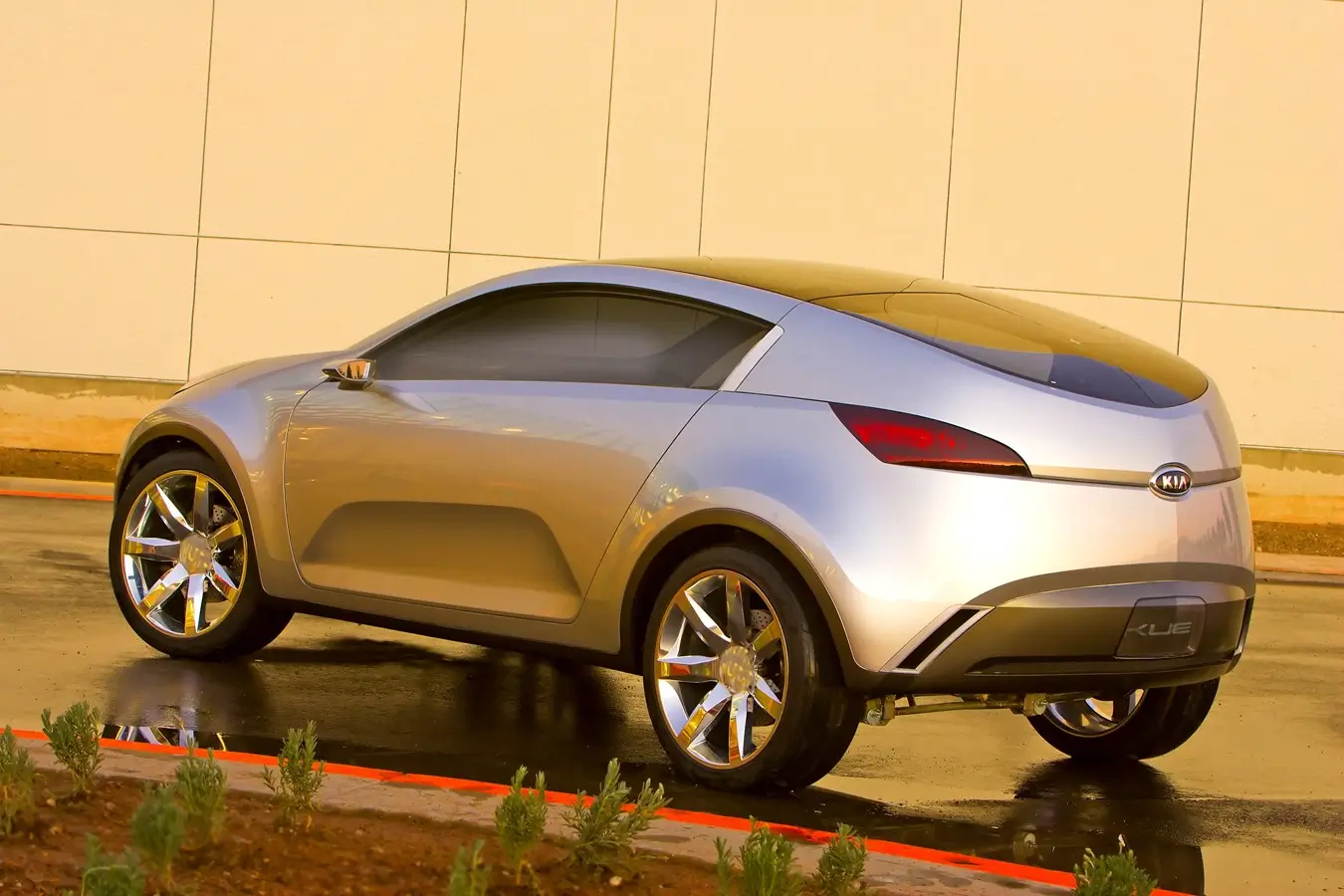
Chief designer Tom Kearns described the Kue’s guiding philosophy simply: good design shouldn’t look like you’re trying too hard. The concept embodied that restraint without sacrificing presence. Four wheels pushed aggressively to the corners. Bodywork stretched taut over the chassis like a second skin. Muscular wheel flares bleeding into crisp, beveled body sections. Swept-back headlights connecting seamlessly to the front grille — creating a face that felt simultaneously clean and combative.
The proportions were deliberate and significant. At 186 inches long with a 114.2-inch wheelbase riding on massive 22-inch seven-spoke alloy wheels, it commanded presence without excess. Scissor-style doors opened upward for dramatic entry, while a separate rear center-hinged door handled cargo access. Nothing about the exterior felt accidental.
Inside, the Kue broke from convention. Rather than the white-and-beige interiors common to most 2007 show concepts, a dark mid-tone palette anchored four individual bucket seats designed not just for the driver but for every occupant equally. Most interesting was the technology interface: programmable touchpad controls and motion-sensing inputs for climate and audio, configurable per driver. Each rear passenger had an independent control surface. In 2007, that was genuinely ahead of its time. The cabin wasn’t asking you to tolerate it, it was welcoming you in.
Under the Hood: 400 Horsepower of Intent
The Kue wasn’t designed to coast on looks alone. Beneath the sculpted hood sat a 4.6-liter DOHC supercharged V8 engine — derived from the powertrain destined for Hyundai’s flagship Equus sedan producing 400 horsepower and 400 lb-ft of torque. A 5-speed automatic transmission routed all that power through a full-time all-wheel-drive system calibrated to perform confidently both on highway and light off-road terrain.
Was this powertrain ever going to reach a dealership in that exact form? No. But it proved something critical: Kia was prepared to think about performance with the same seriousness as any luxury competitor. That ambition planted seeds that are still flowering today.
How It Compared to the Competition in 2007
To understand what made the Kue genuinely provocative, it helps to see what else occupied the mid-size crossover space that year.
| Feature | 2007 Kia Kue Concept | 2007 Toyota FJ Cruiser | 2007 Ford Edge |
|---|---|---|---|
| Engine | 4.6L Supercharged V8 | 4.0L V6 | 3.5L V6 |
| Horsepower | 400 hp | 239 hp | 265 hp |
| Torque | 400 lb-ft | 278 lb-ft | 250 lb-ft |
| Drive System | Full-Time AWD | Part-Time 4WD | AWD |
| Wheelbase | 114.2 in | 109.8 in | 111.2 in |
| Interior Tech | Motion-sensing / Programmable touch | Conventional | Conventional |
| Design Award Won | Eyes on Design (2007) | None | None |
While competitors were busy refining practical family haulers with incremental updates, the Kue was asking an entirely different question: what if a crossover was engineered from the ground up as a driver’s car? No competitor on that floor was making that argument with nearly as much conviction.
A Morning in Detroit That Changed the Conversation
Picture being an automotive journalist in Detroit, January 8, 2007. You’ve already walked through a dozen press conferences. Kia hasn’t historically been a brand that stops your pen mid-sentence. Then the Kue rolls into position. The scissor doors go vertical. The supercharged V8 specs appear on the screen. And across the room, Kia is formally introducing a designer who previously gave the world the Audi TT, standing next to a Korean crossover concept that just won the best design award in the building.
You write a completely different story than you expected to write that day. That’s exactly what happened across Detroit’s automotive press corps. The Kue created a narrative Kia’s marketing budget couldn’t have purchased outright. Autoblog’s live floor coverage noted that the face of the Kue and its design elements were clear indicators of what future Kia production models would look like. No one in that room was dismissing Kia after that morning. The shift in media tone was immediate and measurable.
The Legacy: Where the Kue’s DNA Actually Landed
Here’s what separates the Kue from the graveyard of forgotten show cars: it directly influenced the vehicles Kia actually built and sold in American showrooms.
Peter Schreyer confirmed this on record. When the 2011 Sportage debuted, he said the team was partly inspired by the Kue. He pointed specifically to the side profile, noting a strong resemblance in the sheetmetal character lines that carried from concept to production. The 2011 Sportage carried the Kue’s aggressive front architecture into dealerships and introduced the tiger-nose grille to the world in its definitive production form. That grille then cascaded across the entire Kia lineup, becoming the most recognizable brand signature in the company’s history.
The commercial results were staggering. The third-generation Sportage alone moved 2.2 million units globally, winning the iF Design Award, Red Dot Award, and Good Design Award along the way. It confirmed what the Kue had argued in concept form: that design ambition and commercial success are not mutually exclusive. Additionally, styling elements from the Kue concept contributed to the second-generation Kia Sorento, the first Kia model manufactured on American soil, built at the company’s West Point, Georgia assembly plant.
What the Kue ultimately gave Kia wasn’t a production vehicle. It gave the brand a design vocabulary bold enough to compete with German and Japanese rivals purely on visual terms. That is worth far more than any single model line.
Related: Kia KOUP Overview
Conclusion
The Kia Kue never appeared in a showroom. There’s no window sticker, no owner’s manual, no trim level to select. Yet its fingerprints are on nearly every Kia sold in America over the past fifteen years. The tiger-nose grille your neighbor’s Sportage wears to work each morning, the sculpted character lines on the Forte, the driver-first philosophy embedded in the EV6 GT, they all draw a direct line back to a concept car that debuted in Detroit with 400 supercharged horsepower and a brand identity to prove. For anyone who wants to understand how Kia transformed from a budget automaker into one of the most design-forward brands on the road, the Kue isn’t a footnote. It is the origin story.
FAQs
Q: What is the Kia Kue?
The Kia Kue (KCD-3) is a performance crossover concept unveiled at the 2007 Detroit Auto Show to signal Kia’s bold new design era.
Q: Did the Kia Kue ever reach production?
No, but its design DNA directly shaped the 2011 Kia Sportage and the second-generation Sorento — the first Kia ever built in the USA.
Q: What engine did the Kia Kue use?
A 4.6-liter DOHC supercharged V8 producing 400 hp and 400 lb-ft of torque, paired with full-time AWD.
Q: What award did the Kia Kue win at Detroit?
The Eyes on Design Award for Design Excellence — the first design award ever won by a Korean concept car.
Q: How did the Kia Kue influence the tiger-nose grille?
Its swept-back headlights and aggressive front fascia directly inspired Peter Schreyer’s tiger-nose grille, now Kia’s global design signature.