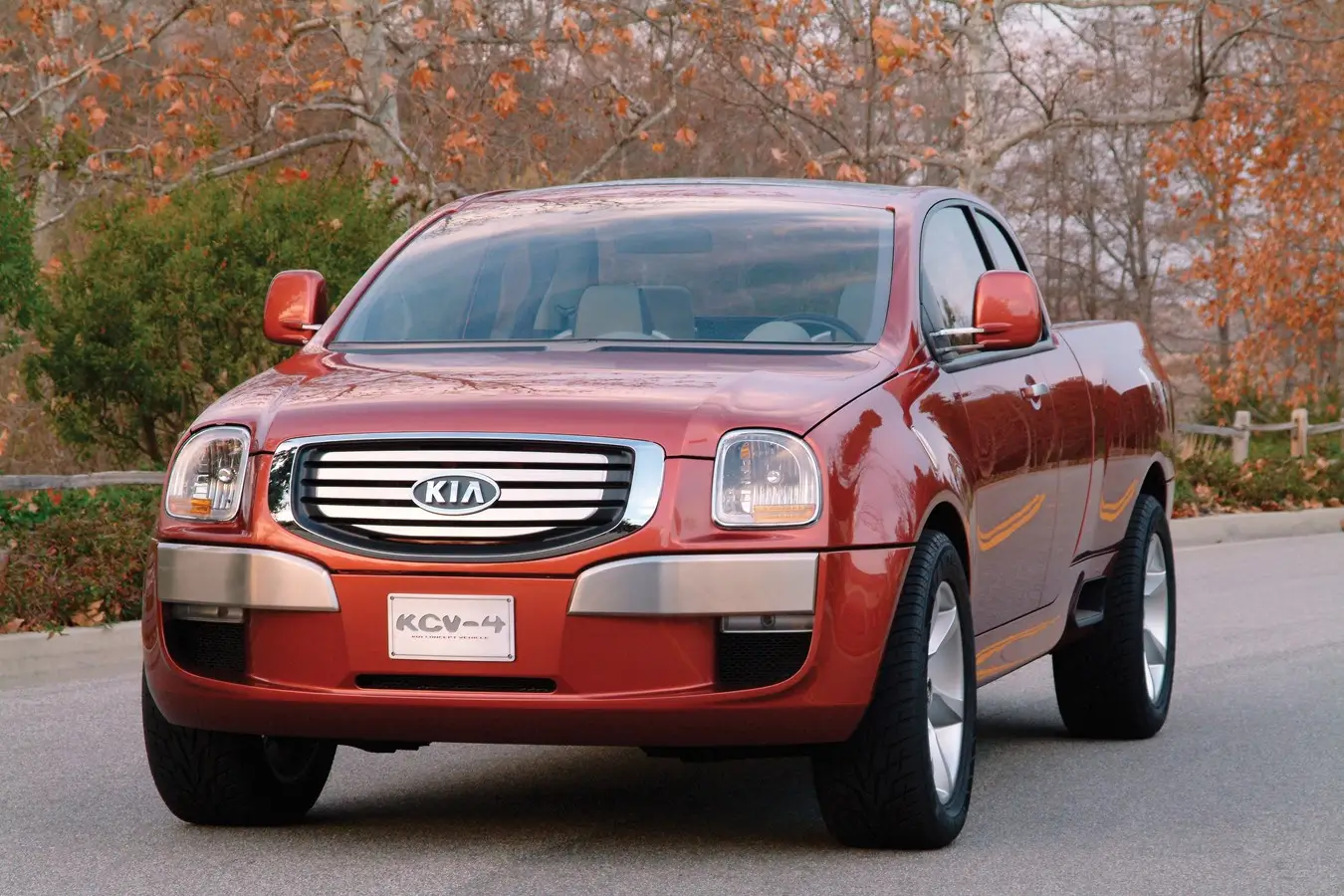
When people discuss Kia’s transformation into a global automotive powerhouse, they usually point to modern EVs and stylish crossovers. But long before the brand became known for futuristic electric vehicles and upscale SUVs, Kia experimented with bold ideas that hinted at a far more ambitious future. One of the most interesting examples was the Kia KCV4 Mojave, a concept pickup truck unveiled at the 2004 Chicago Auto Show.
At a time when midsize trucks were dominated by established names like the Toyota Tacoma and Ford Ranger, Kia introduced a rugged concept that blended utility, sporty styling, and innovative cargo solutions. Although it never reached production, the KCV4 Mojave demonstrated that Kia was already thinking beyond compact sedans and economy cars.
Today, the concept remains an important chapter in Kia’s design history because it previewed the company’s willingness to challenge traditional truck design years before the modern lifestyle pickup boom began.
A Bold Entry Into the Pickup Segment
The KCV4 Mojave arrived during an era when midsize pickups were rapidly evolving from simple work trucks into versatile lifestyle vehicles. Kia’s concept embraced that shift by combining aggressive styling with practical engineering.
The truck featured a muscular stance, pronounced wheel arches, oversized tires, and a high-riding body-on-frame platform. Unlike many concept vehicles that focus purely on appearance, the Mojave appeared surprisingly realistic and production-ready.
Its proportions immediately placed it against trucks such as the Toyota Tacoma, Nissan Frontier, and Ford Ranger. Yet Kia tried to stand apart with a more adventurous personality and several clever packaging ideas.
One of the most noticeable design choices was the extended cab layout with rear-hinged access doors. This configuration improved cabin accessibility while maintaining the compact dimensions expected in the midsize truck category.
Even by today’s standards, the truck still looks modern enough to attract attention.
Engine and Performance Capabilities
Under the hood, Kia equipped the KCV4 Mojave with a 3.8-liter V6 engine producing approximately 280 horsepower. At the time, that output positioned the concept competitively within the midsize truck segment.
The engine was paired with a five-speed automatic transmission, delivering smooth power suitable for both urban driving and off-road adventures. Kia also built the truck using a fully boxed ladder-frame chassis, reinforcing its rugged intentions.
While official towing and payload numbers were never finalized due to its concept status, the platform suggested that Kia intended the Mojave to function as a legitimate utility vehicle rather than a purely experimental showcase.
Compared with many midsize trucks of the early 2000s, the KCV4’s powertrain looked surprisingly ambitious. Some competitors still relied on smaller engines with lower horsepower outputs, which gave the concept a performance-oriented image.
Innovative Cargo Flexibility
Perhaps the most impressive aspect of the KCV4 Mojave was its adaptable cargo management system.
Kia introduced a power-sliding rear bed wall that allowed the truck bed to extend from 71 inches to roughly 86 inches. This feature created extra room for transporting larger items without dramatically increasing the vehicle’s overall length.
The idea resembled the mid-gate system later popularized in other utility-focused vehicles, but Kia integrated the feature in a cleaner and more truck-oriented manner.
For drivers who regularly switch between passenger transport and hauling equipment, this concept offered genuine practicality.
Imagine a weekend camping trip where the owner needs space for mountain bikes, coolers, tents, and outdoor gear. The expandable cargo area would have allowed longer items to fit comfortably without requiring a larger full-size pickup.
That kind of versatility is now common in modern adventure vehicles, but in 2004, it felt remarkably forward-thinking.
Interior Design With Futuristic Influences
Inside the cabin, the KCV4 Mojave reflected Kia’s desire to move upscale and modernize its image.
The dashboard incorporated aircraft-inspired styling cues, metallic accents, and a driver-focused center stack. The concept also included integrated navigation and entertainment systems, features that were still relatively premium at the time.
The interior balanced rugged utility with comfort-oriented details, signaling Kia’s understanding that pickup buyers increasingly wanted refinement alongside capability.
One detail that stood out was the spacious cabin arrangement. The rear-hinged access doors improved entry for passengers and made the compact truck feel more practical for families and active lifestyles.
I remember seeing photos of the KCV4 Mojave years ago and being genuinely surprised that Kia had explored such an advanced truck concept so early. Even today, some of its design ideas feel ahead of their time.
How the KCV4 Mojave Compared to Rivals
The midsize truck segment in the early 2000s was highly competitive, but Kia approached it from a slightly different angle. Instead of focusing solely on durability, the company attempted to blend innovation, lifestyle appeal, and technology.
| Feature | Kia KCV4 Mojave | Toyota Tacoma (2004) | Ford Ranger (2004) |
|---|---|---|---|
| Engine | 3.8L V6 | 3.4L V6 | 4.0L V6 |
| Horsepower | 280 hp | 190 hp | 207 hp |
| Bed Innovation | Sliding expandable bed | Traditional bed | Traditional bed |
| Cabin Access | Rear-hinged doors | Standard cab layout | Standard cab layout |
| Design Focus | Lifestyle + Utility | Reliability | Work-oriented practicality |
This comparison highlights how Kia attempted to position the Mojave as more than just another pickup. The concept leaned heavily into flexibility and modern styling, areas where many competitors remained conservative.
Why the KCV4 Mojave Never Reached Production
Despite positive attention from automotive enthusiasts and media outlets, the KCV4 Mojave never entered mass production.
At the time, Kia lacked the global truck manufacturing infrastructure and export capability needed to compete effectively in North America’s pickup market. Producing a truck requires enormous investment in durability testing, dealer support, and manufacturing logistics.
Additionally, Kia’s brand identity in 2004 was still heavily associated with affordable compact cars. Entering the fiercely loyal truck market would have been an extremely difficult challenge.
Instead, Kia focused on expanding its SUV and passenger vehicle lineup. Years later, the company eventually entered the pickup segment in select markets with newer products, proving that the original Mojave concept may have planted the seed for future ambitions.
The Lasting Impact of the Concept
Although the KCV4 Mojave never reached dealerships, it played an important strategic role for Kia.
The concept demonstrated several ideas that later became central to the brand’s success:
- Bold and emotional styling
- Multi-purpose vehicle design
- Improved interior quality
- Lifestyle-focused engineering
- Innovation aimed at younger buyers
In many ways, the Mojave previewed Kia’s future philosophy before the company fully embraced modern design leadership.
Today, automakers frequently market trucks as adventure-ready lifestyle machines rather than purely work-focused tools. The KCV4 explored that direction years before it became mainstream.
Related: Kia KCV-III Overview
Conclusion
The Kia KCV4 Mojave remains one of the most fascinating forgotten concepts in Kia’s history. It combined rugged pickup capability with innovative cargo solutions, futuristic styling, and practical versatility at a time when Kia was still building its reputation globally.
While production limitations prevented the truck from becoming reality, the concept showcased Kia’s willingness to experiment and challenge established competitors. Looking back, the Mojave feels less like an abandoned idea and more like an early glimpse into the bold design identity Kia would later become known for.
For enthusiasts interested in rare automotive concepts, the KCV4 Mojave stands as a reminder that some of the industry’s most influential ideas begin long before they ever reach the road.
FAQs
What was the Kia KCV4 Mojave?
The Kia KCV4 Mojave was a midsize pickup truck concept unveiled at the 2004 Chicago Auto Show. It featured a powerful V6 engine, innovative cargo flexibility, and a rugged body-on-frame design.
Did the Kia KCV4 Mojave enter production?
No, the KCV4 Mojave remained a concept vehicle and never entered mass production due to manufacturing and market limitations at the time.
What engine did the KCV4 Mojave use?
The concept used a 3.8-liter V6 engine producing approximately 280 horsepower paired with a five-speed automatic transmission.
What made the KCV4 Mojave unique?
Its most notable feature was the power-sliding rear bed wall that expanded cargo space, along with rear-hinged access doors and a modern lifestyle-oriented design.
Is the KCV4 Mojave related to the Kia Mohave SUV?
No. The KCV4 Mojave concept truck is separate from the Kia Mohave (also called Borrego in some markets), which is a production midsize SUV sold internationally.