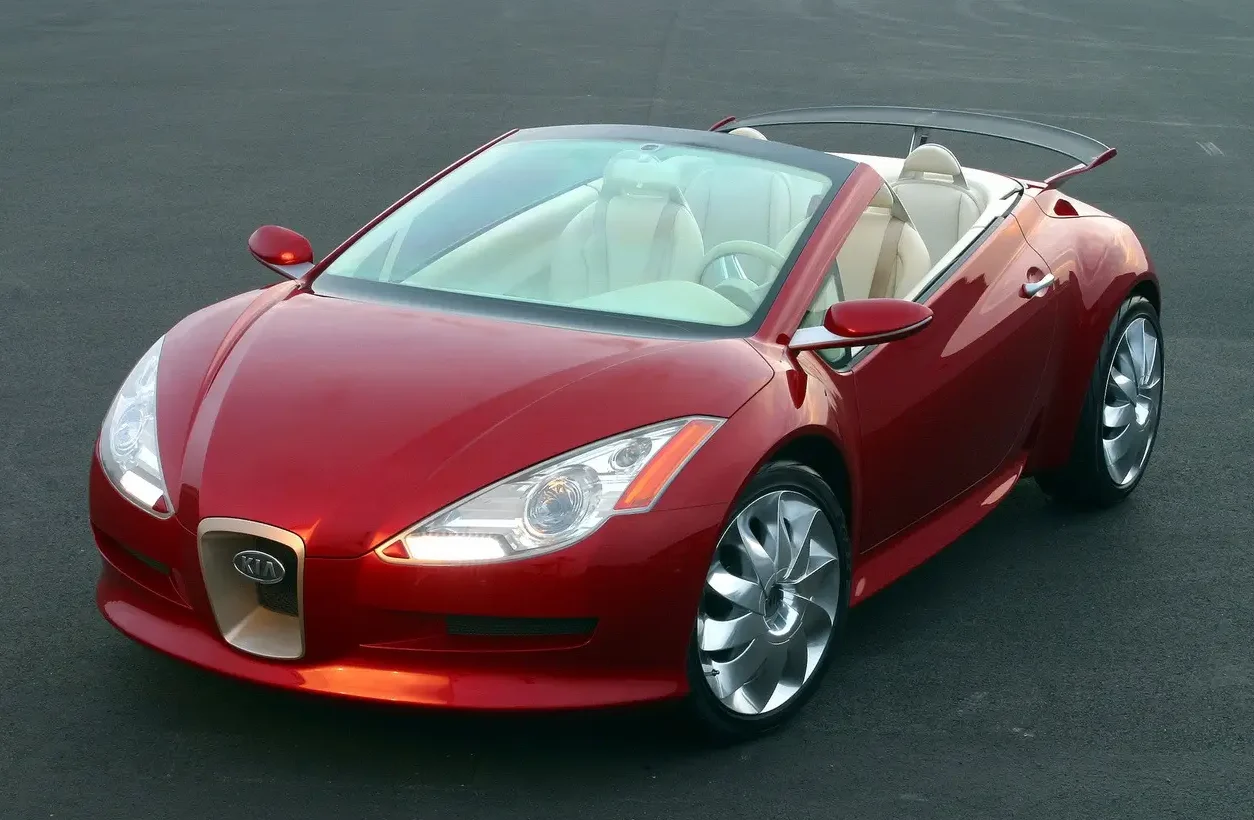
Back in 2003, when Kia was still shaping its global identity, the unveiling of the Kia KCV-III at the Frankfurt Motor Show quietly signaled something bigger than just another concept car. It wasn’t merely a design exercise. It was a forward-thinking experiment that blended youthful styling, emerging technology, and lifestyle-oriented innovation into a compact, open-air package.
At a time when automakers were cautiously evolving, Kia took a risk. The KCV-III didn’t aim to please everyone. Instead, it targeted a new generation of drivers tech-aware, style-conscious, and eager for something different from traditional coupes.
A Design Language That Felt Ahead of Its Time
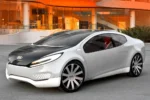
The first thing that stands out about the Kia KCV-III is its unapologetically futuristic design. Often described as “cyber-style,” the exterior leans into sharp contours, dramatic proportions, and visual tension. High-mounted headlamps stretch upward along the wheel arches, giving the car an almost concept-art presence—something that still feels modern even by today’s standards.
Its compact 2+2 convertible coupe layout strikes a balance between sportiness and everyday usability. The proportions are tight, yet not cramped, suggesting Kia’s early understanding of urban mobility trends.
But the real centerpiece? A fully automated three-panel glass roof. This wasn’t just a typical convertible setup, it used solar-control glass and folded seamlessly into the trunk. Even today, panoramic and retractable roof systems are premium features, which makes this 2003 innovation particularly impressive.
From a personal standpoint, I’ve seen many concept vehicles that feel exaggerated or unrealistic but the KCV-III strikes a rare balance where you can actually imagine it driving down a U.S. coastal highway, top down, without looking out of place.
Performance That Matches Its Urban Intent
Under the hood, the Kia KCV-III wasn’t built to dominate racetracks and that was never the goal. Instead, it delivered a balanced driving experience suited for city life and weekend cruising.
The concept featured a 2.0-liter DOHC 4-cylinder engine producing approximately 145 PS (around 143 horsepower) and 190 Nm of torque. While these numbers may seem modest today, they were perfectly aligned with the vehicle’s lightweight and lifestyle-focused design.
This wasn’t about raw speed, it was about accessibility, efficiency, and fun. Think of it as a car designed for spirited drives through urban streets or relaxed coastal routes rather than aggressive performance runs.
A Digital-First Interior Before It Was Mainstream
Step inside, and the KCV-III reveals another layer of innovation. Kia leaned heavily into a “digital lifestyle” theme—something that feels incredibly relevant today.
The cabin incorporated features that were rare for its time:
- An integrated MP3 player within the infotainment system
- A personal IC key card replacing the traditional key
- Clean, minimalistic dashboard architecture focused on usability
These elements may seem standard now, but in 2003, they reflected a clear shift toward connected, user-centric vehicle design.
Kia wasn’t just building a car—it was experimenting with how drivers interact with technology. This early focus on digital integration foreshadowed the brand’s current leadership in infotainment systems and smart mobility.
Safety and Smart Technology That Pushed Boundaries
Beyond design and convenience, the Kia KCV-III also introduced advanced safety concepts that were well ahead of their time.
It featured an early version of an Electronic Stability Program (ESP), which monitored multiple driving inputs such as steering angle, throttle position, and vehicle dynamics. This system worked alongside brake assist to enhance control during challenging driving conditions.
Even more impressive was the inclusion of forward-looking radar technology. This enabled features like adaptive cruise control—something that wouldn’t become widely available in mainstream vehicles until years later.
Additional smart touches included:
- Automatic rain-sensing wipers
- Enhanced traction control systems
- Early collision awareness capabilities
These innovations highlight Kia’s ambition to not just follow industry trends but anticipate them.
How It Compared to Its Contemporaries
To truly understand the significance of the Kia KCV-III, it helps to see how it stacked up against other concept vehicles of the early 2000s:
| Feature | Kia KCV-III | Typical 2003 Compact Coupe Concept |
|---|---|---|
| Roof System | 3-panel automatic glass convertible | Manual or basic soft-top |
| Interior Tech | MP3 integration, IC key card | Basic audio systems |
| Safety Features | ESP, radar-based systems | Limited stability control |
| Design Approach | Cyber-inspired, futuristic | Conservative styling |
| Target Audience | Younger, tech-savvy drivers | Broad/general market |
What becomes clear is that Kia wasn’t just participating, it was differentiating. While many competitors played it safe, the KCV-III leaned into innovation and identity.
Why the Kia KCV-III Still Matters Today
Even though the Kia KCV-III never made it to production, its influence can still be felt across Kia’s modern lineup.
Today’s vehicles from Kia Corporation showcase:
- Advanced infotainment ecosystems
- Bold, design-forward aesthetics
- Driver-assistance technologies once considered futuristic
The KCV-III essentially acted as a testing ground a place where Kia explored ideas that would later evolve into real-world features.
What makes this concept particularly valuable is its clarity of vision. It didn’t try to be everything to everyone. Instead, it focused on a specific type of driver and built an experience around that lifestyle.
A Real-World Scenario: Who Would This Car Be Perfect For?
Imagine a young professional living in a city like Los Angeles or Miami in the early 2000s. They want something stylish, compact, and fun but also modern enough to reflect their tech-driven lifestyle.
The Kia KCV-III fits that role perfectly.
With its convertible roof, compact footprint, and digital features, it would have been ideal for:
- Weekend coastal drives
- Urban commuting with a touch of flair
- Drivers who value design as much as practicality
Even today, if a modernized version were released, it would likely appeal to the same audience perhaps even more strongly given the rise of lifestyle-oriented vehicles.
What Set It Apart From the Start
The real strength of the Kia KCV-III wasn’t just in its individual features it was in how those features came together into a cohesive vision.
Instead of treating design, technology, and performance as separate elements, Kia integrated them into a unified concept. The result was a vehicle that felt intentional, not experimental for the sake of it.
That level of cohesion is what many concept cars lack and it’s exactly what made the KCV-III stand out.
Related: Imagine by Kia Overview
Conclusion
The Kia KCV-III represents a pivotal moment in Kia’s evolution, a time when the brand began to think beyond conventional boundaries and embrace innovation with confidence.
While it never reached production, its ideas lived on. From advanced safety technologies to user-focused interiors and bold design language, the KCV-III helped shape the direction Kia would take in the years to come.
In many ways, it wasn’t just a concept car that was a statement. A declaration that Kia was ready to compete, innovate, and redefine expectations.
FAQs
What is the Kia KCV-III?
The Kia KCV-III is a concept car introduced in 2003, designed as a compact 2+2 convertible coupe with advanced technology and futuristic styling.
Was the Kia KCV-III ever produced?
No, it remained a concept vehicle and was never released as a production model.
What engine did the Kia KCV-III have?
It featured a 2.0-liter DOHC 4-cylinder engine producing around 145 PS and 190 Nm of torque.
What made the Kia KCV-III unique?
Its automatic three-panel glass roof, early digital interior features, and advanced safety technologies like radar-based systems set it apart.
Why is the Kia KCV-III important today?
It showcased early versions of technologies and design philosophies that are now common in modern Kia vehicles.