Before Kia became globally recognized for bold styling and technology-focused SUVs, the brand experimented with several ambitious concept vehicles that quietly shaped its future direction. One of the most overlooked yet influential projects was the Kia KND-4 concept, unveiled during the 2007 Seoul Motor Show.
At first glance, the KND-4 looked like an aggressive compact off-roader with futuristic styling cues. But underneath its dramatic bodywork, the concept represented something much bigger for Kia: a transition from practical transportation toward emotionally driven automotive design.
Even today, many enthusiasts see traces of the KND-4’s DNA in later SUVs such as the Kia Sportage and Kia Sorento. Its combination of muscular proportions, advanced AWD technology, and premium interior experimentation made it one of the brand’s most important concept studies of the late 2000s.
The Origins of the KND-4 Concept
The KND-4 was developed by Kia’s Namyang Design Center in South Korea during a period when compact SUVs were rapidly gaining popularity worldwide. Automakers were beginning to realize that buyers wanted more than utility—they wanted personality, athletic styling, and advanced technology.
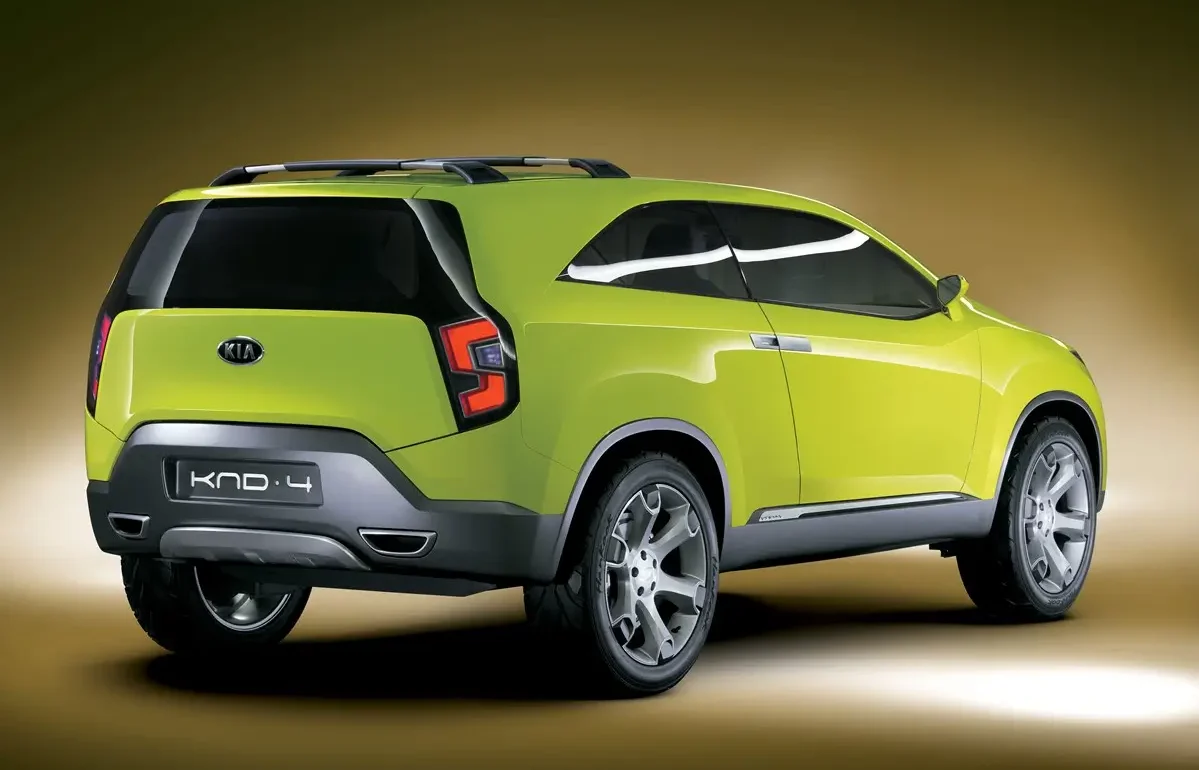
Kia designed the KND-4 as a futuristic urban adventure vehicle. Rather than creating a traditional family SUV, the company focused on a sporty three-door layout with a rugged stance and coupe-inspired proportions.
The concept measured approximately 4,466 mm in length, giving it dimensions close to modern compact crossovers. However, its design language felt far more experimental than most production SUVs available in 2007.
One detail that immediately stood out was the striking “Luminous Green” paint finish, which emphasized the vehicle’s sharp body contours and aggressive wheel arches. Large 20-inch alloy wheels, short overhangs, and elevated ground clearance helped the concept appear ready for both city driving and off-road exploration.
Exterior Styling That Predicted Future Kia SUVs
Looking back today, the KND-4 almost feels like an early blueprint for Kia’s later SUV identity.
The front fascia featured slim LED headlamps and a bold grille treatment that hinted at the confident styling direction the company would later embrace more fully. The wide stance gave the SUV a planted appearance, while pronounced fenders added visual toughness.
Unlike many concept vehicles that appear unrealistic, the KND-4 balanced futuristic creativity with believable production-inspired elements. Its proportions were muscular without looking cartoonish.
The panoramic rear glass area also became one of the concept’s most talked-about features. Combined with the sloping roofline, it gave the SUV a sporty silhouette that contrasted with the boxier SUVs common during that era.
From certain angles, the vehicle even resembled a modern electric crossover years before EV styling became mainstream.
I still remember seeing archived photos of the KND-4 for the first time and being surprised at how modern the design still feels nearly two decades later.
Powertrain and AWD Technology
Under the hood, Kia equipped the concept with a 2.2-liter VGT diesel engine designed to deliver strong low-end torque and improved efficiency.
While official production-level performance figures were never fully finalized, the powertrain emphasized practical performance rather than extreme horsepower numbers. Kia paired the engine with an advanced Active Torque Transfer (ATT) all-wheel-drive system intended to improve traction and cornering stability.
At the time, this was an important step for Kia because the brand was actively working to strengthen its reputation in the SUV and crossover market.
The AWD technology demonstrated how Kia planned to compete with established manufacturers offering capable compact utility vehicles with improved driving dynamics.
In real-world terms, the KND-4 seemed targeted at drivers who wanted one vehicle capable of weekday commuting, weekend road trips, and occasional outdoor adventures.
That idea has now become the standard formula for modern crossovers.
Interior Design and Technology Features
Inside the cabin, the concept embraced a futuristic four-seat configuration with individual seating for each passenger.
The interior combined metallic-finish panels, sculpted surfaces, and ambient lighting to create a premium atmosphere. Unlike many compact SUVs from the mid-2000s, the cabin focused heavily on driver engagement and technology integration.
Some standout features included:
- Bluetooth connectivity
- Blu-ray multimedia capability
- Advanced infotainment concepts
- Premium trim materials
- Panoramic visibility design
Although several of these technologies were considered ambitious at the time, they previewed the growing importance of connected vehicle experiences.
Today, features like wireless connectivity and advanced infotainment systems are expected in nearly every modern Kia SUV, proving how forward-thinking the KND-4 truly was.
How the KND-4 Compared to Other Kia Concepts
During the late 2000s, Kia introduced several important concept vehicles, but each served a different purpose within the brand’s evolution.
| Concept Vehicle | Main Focus | Key Characteristic | Influence on Future Models |
|---|---|---|---|
| Kia KND-4 | Compact SUV innovation | Rugged sporty styling | Future crossover design language |
| Kia Kee | Performance coupe styling | Tiger nose grille evolution | Brand-wide front fascia identity |
| Kia GT Concept | Luxury performance sedan | Grand touring performance | Influenced Kia Stinger |
| Kia Cross GT | Premium SUV design | Luxury-focused proportions | Influenced Telluride styling |
What made the KND-4 especially important was its balance between realism and experimentation. Some concept cars exist purely for attention, but the KND-4 explored ideas that eventually became central to Kia’s SUV philosophy.
Why the KND-4 Still Matters Today
Modern Kia vehicles are often praised for their styling confidence, advanced technology, and value-focused engineering. The KND-4 helped establish many of those foundations years before the company achieved mainstream global recognition.
Today’s SUV buyers prioritize:
- Athletic styling
- Versatile interiors
- Smart technology
- AWD capability
- Lifestyle-oriented design
The KND-4 anticipated all of these trends long before they became industry standards.
In many ways, the concept showed Kia’s willingness to challenge conservative design norms and experiment with emotional styling rather than simply building affordable transportation.
That mindset eventually helped transform Kia into one of the fastest-growing automotive brands in multiple global markets.
How the KND-4 Anticipated Modern SUV Trends
Imagine a young professional living in a major U.S. city in 2007. They wanted an SUV compact enough for urban parking but stylish enough to stand out and capable enough for weekend mountain trips.
At the time, most compact SUVs leaned heavily toward practicality and lacked visual excitement.
The KND-4 proposed a different idea: an SUV that could combine sporty aesthetics, advanced technology, and adventurous capability without sacrificing everyday usability.
That exact formula now dominates the modern crossover segment.
Vehicles like the latest Sportage and Sorento effectively carry forward the same philosophy the KND-4 introduced years earlier.
The Lasting Influence on Kia’s Brand Identity
The importance of the KND-4 goes beyond its specifications or concept status. It represented a turning point in Kia’s confidence as a global design-driven automaker.
Before this era, Kia was often viewed primarily as a budget-focused manufacturer. Concepts like the KND-4 demonstrated that the company was ready to compete through creativity, innovation, and emotional appeal.
Its bold proportions, futuristic lighting, and premium cabin experimentation helped pave the way for Kia’s modern design reputation.
Even though the KND-4 itself never entered production, its influence can still be recognized across Kia’s expanding SUV lineup today.
Related: Kia Kee Overview
Conclusion
The Kia KND-4 concept remains one of the brand’s most underrated design studies. Introduced at the 2007 Seoul Motor Show, it showcased Kia’s vision for the future of compact SUVs through bold styling, advanced AWD technology, and a driver-focused interior.
More importantly, it revealed a company beginning to redefine itself.
Many of the ideas explored in the KND-4—sporty crossover proportions, premium technology integration, and lifestyle-oriented SUV design—eventually became essential elements of Kia’s global success.
For automotive enthusiasts, the KND-4 serves as a fascinating reminder that some concept vehicles do far more than attract attention at auto shows. They quietly shape the future.
FAQs
What is the Kia KND-4?
The Kia KND-4 is a compact SUV concept vehicle unveiled by Kia at the 2007 Seoul Motor Show. It was designed to preview future SUV styling and all-wheel-drive technologies.
Did the Kia KND-4 enter production?
No, the KND-4 remained a concept vehicle and was never mass-produced. However, several of its design ideas influenced future Kia SUVs.
What engine did the Kia KND-4 use?
The concept featured a 2.2-liter VGT diesel engine paired with an Active Torque Transfer AWD system.
Which Kia models were influenced by the KND-4?
Many enthusiasts believe the KND-4 influenced later SUVs such as the Kia Sportage and Kia Sorento due to its sporty crossover proportions and rugged styling cues.
Why is the KND-4 important in Kia’s history?
The KND-4 marked an important stage in Kia’s transition toward bold global design, advanced technology integration, and lifestyle-focused SUV development.