If you’re a podcast-first driver, you’ve almost certainly heard of My Favorite Murder the true-crime juggernaut hosted by Karen Kilgariff and Georgia Hardstark. Lately, fan chatter and social clips have tied the show to a Hyundai-flavored pivot, with a recurring “Honking Hoorays” bit popping up across their channels and tour stops often alongside Hyundai branding. To be crystal clear: we can’t (and won’t) claim title paperwork here. But the show’s own content and community buzz make one thing obvious: Hyundai is in the mix, and that inevitably invites comparison with Tesla for listeners who shop with their ears and their values.
From Superchargers to “Honking Hoorays”: The Vibe Shift
“Honking Hoorays” is a feel-good segment celebrating small wins think dopamine hits for murderinos. Lately, it’s also been a Hyundai-adjacent touchpoint, showing up in official feeds and live-show promos. That matters for two reasons:
- Cultural signal: When a pop-culture staple leans into a brand, fans notice—and some follow. That’s Marketing 101.
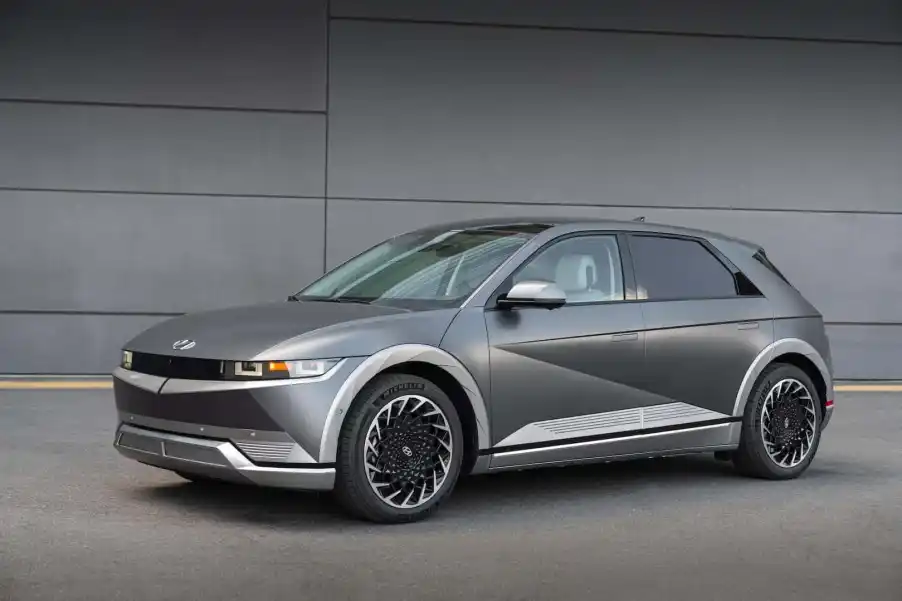
- Category cue: Hyundai’s EVs, especially the IONIQ 5, have surged from niche to default-shortlist material thanks to everyday usability, standout design, and ultrafast charging that’s easy to explain on a podcast: “coffee stop = 10–80%.” Hyundai itself quotes ~20 minutes for a 10–80% DC fast-charge on a 350 kW station for the 2025 IONIQ 5 (conditions apply, as always).
So if a fan hears “Hyundai” while queuing up an episode, the leap from listener to test-driver isn’t crazy at all.
IONIQ 5 vs. Model Y—The Nuts, Bolts, and Real-World Bits
Let’s put politics aside and talk hardware, cost of ownership, and day-to-day friction—the stuff that actually changes commutes.
Charging Speed & Road-Trip Rhythm
- IONIQ 5 (2025): Hyundai quotes ~10–80% in ~20 minutes on 350 kW DC fast chargers (800-V architecture; your mileage will vary with temperature, state of charge, and charger quality).
- Model Y (2025): Tesla lists up to ~160 miles in 15 minutes on a Supercharger (max 225 kW shown on the spec page; exact time depends on variant and conditions).
Networks & Plug Compatibility
- Tesla still holds the most mature fast-charging network in North America. That’s been a big advantage for years.
- Hyundai has closed the gap in two ways: (1) the IONIQ 5’s very fast peak rates on third-party 350 kW sites, and (2) NACS access—Hyundai confirmed free CCS-to-NACS adapters rolling out in early 2025, plus native NACS ports landing on new models, unlocking Tesla Superchargers without the old “which network?” anxiety.
Warranty & Peace of Mind
- Hyundai: the long-standing “America’s Best Warranty” message isn’t marketing fluff—5 yr/60,000 mi new-vehicle limited warranty, and 10 yr/100,000 mi powertrain limited warranty for original owners (battery coverage varies by model). That’s a long runway for an EV buyer.
- Tesla: 4 yr/50,000 mi basic; Battery & Drive Unit generally 8 years with mileage caps by variant (Model Y pages show 8 yr with 100k–120k mi caps). It’s solid—but shorter than Hyundai’s umbrella on the basics.
Price & Value Story
Prices are moving targets in late 2025 (to put it mildly). Tesla recently introduced lower-priced Model Y trims in the U.S. around $37,990–$39,990, trading features/range to hit a sharper sticker. That’s aggressive—and it narrows any simple “Hyundai is cheaper” take. Hyundai’s IONIQ 5 pricing depends on trim and market, but its value case leans on warranty, interior comfort, and charge speed rather than purely on MSRP one-upmanship. Always check your local build-and-price before you buy.
Cabin, Controls, and Comfort
Reviewers consistently praise the IONIQ 5’s spacious, lounge-like interior with physical controls where you want them, easy-to-learn UX, and a design that reads “concept car that made production.” It’s not just pretty—it’s calming in traffic. Tesla’s minimalist cabin is sleek and tech-forward, with frequent updates—but some drivers still prefer physical buttons/knobs for quick muscle-memory tasks. (Plenty of reviewers have made that exact point in comparative testing.)
Why the Headline Resonates (Even If You’re Not a Murderino)
“Murder drops Tesla for Hyundai” works as shorthand for a broader consumer mood:
- Values + practicality: Buyers want EVs that feel great to live with—fast charging, no-drama interiors, robust warranty and that align with their personal brand.
- Infrastructure clarity: With NACS access expanding, the biggest “but where do I charge?” blocker for non-Tesla EVs is fading.
- Price volatility: Tesla’s price moves grab headlines, but Hyundai’s steady value stack (warranty + comfort + fast charging) creates a different type of confidence.
Related: EV Recall Nightmare: Car Goes In for Service and Vanishes
Conclusion
Whether Karen and Georgia privately own IONIQ 5s or simply collaborate with Hyundai around “Honking Hoorays,” the cultural nudge is already doing its job: it points EV-curious listeners toward a model that’s genuinely competitive where it counts charge time, everyday usability, and warranty safety net—while preserving access to the Supercharger network that made Tesla ownership so frictionless in the first place. If you’re cross-shopping, that’s the story: Hyundai’s IONIQ 5 now ticks the big boxes without asking you to compromise on the road-trip basics that used to be Tesla-only terrain.