Electric vehicles were once a side project for Ford. Today, they sit at the center of a massive, risky transformation that’s reshaping factories, product plans. The company’s long-term vision. The sporty Mustang Mach-E to the work-ready F-150 Lightning and E-Transit van, Ford EVs are trying to prove that electric power. It can fit everyday life whether you’re commuting, hauling, or running a business.
Below is a deep dive into Ford’s electric push, its current lineup, and where things are headed next.
1. The Ford EV Lineup: Mach-E, F-150 Lightning, and E-Transit
Right now, Ford’s core all-electric lineup focuses on three nameplates:
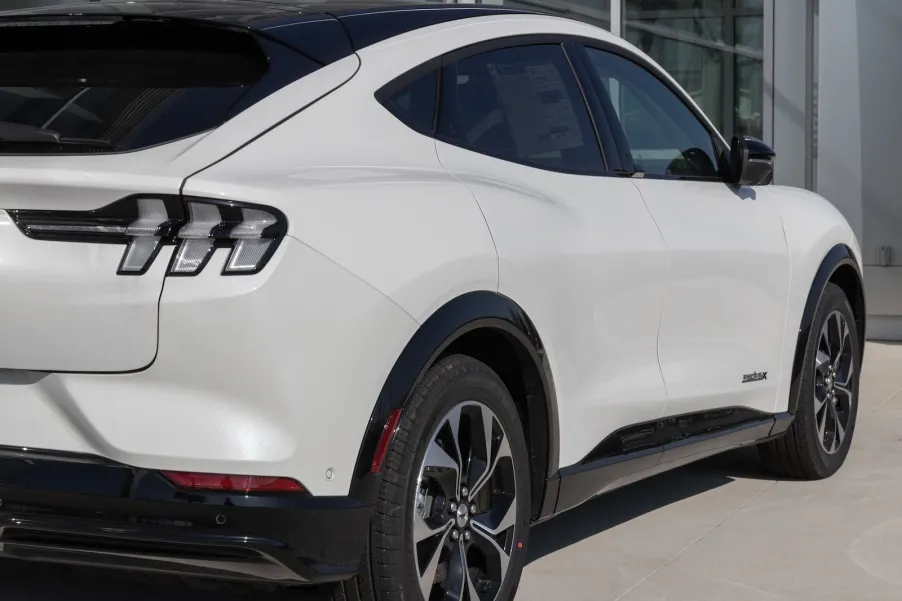
- Mustang Mach-E – A fully electric SUV wearing the iconic Mustang badge. It offers brisk acceleration, up to an EPA-estimated 320 miles of range in some 2025 trims. A high-tech cabin with a 15.5″ touchscreen, and multiple performance variants like GT and Rally.
- F-150 Lightning – An electric version of America’s best-selling truck, built for towing, hauling. And powering tools or even your home through Pro Power Onboard and bidirectional charging.
- E-Transit – A commercial electric van available in multiple body styles (cargo, cutaway, chassis cab), targeting fleet owners who want lower running costs and zero tailpipe emissions for last-mile delivery and service jobs.
Together, these three models cover the three pillars Ford cares most about: performance (Mach-E), work (Lightning), and business fleets (E-Transit).
2. Charging, Range, and the BlueOval Network
Buying an EV is as much about charging as it is about the car itself. Ford has been trying to ease that anxiety on two fronts:
- Home Charging:
- Through programs like the Ford Power Promise, many buyers of 2024–2025 Mustang Mach-E, F-150 Lightning, or E-Transit in certain markets get a complimentary home charger plus standard installation, making overnight charging the default habit instead of gas-station.
- Public Charging:
- Ford’s BlueOval™ Charge Network integrates thousands of DC fast chargers and now includes access to Tesla Superchargers in North America, giving Ford EV drivers one of the largest combined networks to tap into on road trips.
On the range side:
- The Mustang Mach-E Premium can reach up to about 320 miles of EPA-estimated range with an extended-range battery and rear-wheel drive.
- The F-150 Lightning and E-Transit prioritize capability and payload, with ranges that are competitive in their classes but naturally more sensitive to towing and load.
For most daily drivers and urban fleets, Ford is betting that overnight home or depot charging plus a strong fast-charge network is enough to make EV life practical—not just aspirational.
3. Ford’s EV Strategy: Big Investments, Bigger Adjustments
Ford has loudly committed to electrification, but the road hasn’t been straight.
- Globally, Ford has announced tens of billions of dollars in EV and battery investment, including a push toward carbon neutrality by 2050 and a fully electric passenger lineup in Europe by 2030.
- In the U.S., the company recently launched a massive $5 billion+ investment wave in new EV platforms, battery plants. And a retooled Louisville Assembly Plant to build a next-gen affordable electric pickup on a universal EV platform. With a targeted starting price around $30,000 and a launch goal of 2027.
But there’s a twist: demand for EVs has cooled versus earlier hype.
- Ford’s EV unit, Model e, has posted significant financial losses, and CEO Jim Farley has warned that the EV market may end up “way smaller than expected,. Especially as U.S. tax credits fade and competition intensifies.
- In Europe, slower EV adoption and economic headwinds have pushed Ford to cut thousands of jobs and scale back some expectations.
In late 2025, Ford even paused production of the F-150 Lightning and shifted workers back to build more profitable gas. And hybrid F-150s, highlighting the tension between EV ambition and short-term profit.
So Ford EVs sit at an interesting crossroads: the company is still investing heavily. But it’s also rebalancing toward hybrids and cost-cutting to keep the transition financially survivable.
4. Living With a Ford EV: Costs, Maintenance, and Everyday Use
From the driver’s seat, Ford EVs are designed to feel familiar yet futuristic.
Lower Operating Costs
- Ford estimates that a Mustang Mach-E driver could see over 50% savings in energy costs versus. A comparable gas SUV over 5 years or 75,000 miles, assuming typical U.S. fuel and electricity prices.
- Fewer moving parts in electric drivetrains also mean less routine maintenance: no oil changes, no exhaust system, fewer fluids.
Maintenance Schedule
Ford recommends EV owners:
- Visit an EV-certified dealer about every 10,000 miles for basic checks (tires, brakes, software, etc.).
- Change the cabin air filter at 40,000 miles and then every 20,000 miles.
- Replace coolant around 200,000 miles (or by time, whichever comes first).
Day-to-Day Practicality
- The Mach-E offers SUV practicality (five seats, fold-flat rear row, a usable front trunk).
- The F-150 Lightning retains the pickup layout, bed, and towing features that truck buyers expect. It while adding clever features like a huge front trunk and onboard power outlets.
- E-Transit slots into existing commercial operations, with telematics and connected services via Ford Pro to help fleets manage charging, routes, and uptime.
For many owners, the biggest lifestyle change isn’t how the vehicle drives. It is learning to charge like you charge your phone: a little every night, full for the big days.
5. Pros, Cons, and the Future of Ford EVs
Like every automaker in the EV race, Ford’s electric story has clear upsides and some real challenges.
What Ford EVs Get Right
- Recognizable nameplates: Turning familiar badges—Mustang, F-150, Transit—into EVs helps buyers trust the product instead of feeling like guinea pigs.
- Charging ecosystem: BlueOval network access, Tesla Supercharger integration, and home-charger programs directly attack range and charging anxiety.
- Strong performance: Instant torque, quick 0–60 times (especially for Mach-E GT and Lightning), and quiet rides give a premium feel even before accounting for fuel savings.
Where Ford Is Struggling
- Profitability: The EV division is losing money, and big R&D plus factory investments are under pressure.
- Market Uncertainty: Slower-than-expected EV adoption in the U.S. and Europe has forced job cuts, production pauses, and shifting priorities back toward hybrids.
- Price Pressure: With many EVs still averaging high price tags in the U.S. market, Ford’s push for a sub-$30,000 electric truck and more affordable models will be crucial.
The Road Ahead
Ford’s EV future will likely look more balanced than its early “all-in” rhetoric:
- Expect more hybrids and plug-in hybrids alongside a refined EV lineup.
- Watch for next-gen, lower-cost EV platforms coming from places like Louisville and BlueOval Battery Park.
- In Europe, Ford still aims for a fully electric passenger lineup by 2030, keeping regulatory pressure as a major driver.
Related: The Ford Mustang Mach-E EV: An Electric SUV With Muscle, Moxie, and Mainstream Appeal
For buyers, the takeaway is simple: Ford EVs are no longer experiments, they’re mainstream products, backed by serious infrastructure and long-term plans. But behind the scenes, the company is racing to make those EVs affordable and profitable before the market shifts again.
If you’d like, I can next help you turn this into an SEO package with a meta title, meta description, and Yoast-friendly permalink specifically for the keyword “Ford EVs.”