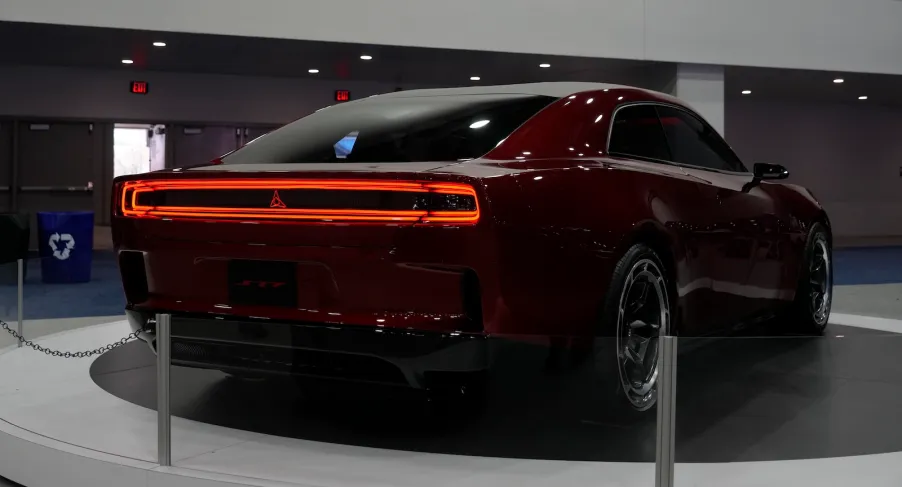
If you’ve been following Dodge’s turbulent EV saga, the latest twist lands like a downshift at redline: multiple outlets report that the halo-grade Charger Daytona SRT “Banshee” is no more. Mopar Insiders often accurate on Stellantis scuttlebutt—says supplier sources confirm the 800-volt Banshee program has been canceled as Dodge pivots back toward V-8s. Road & Track and Car and Driver echoed the report, noting Dodge hasn’t formally confirmed it but hasn’t denied it convincingly either. Taken together, it paints a sober picture: the loudest, wildest version of Dodge’s electric future may have been shelved before it truly lived.
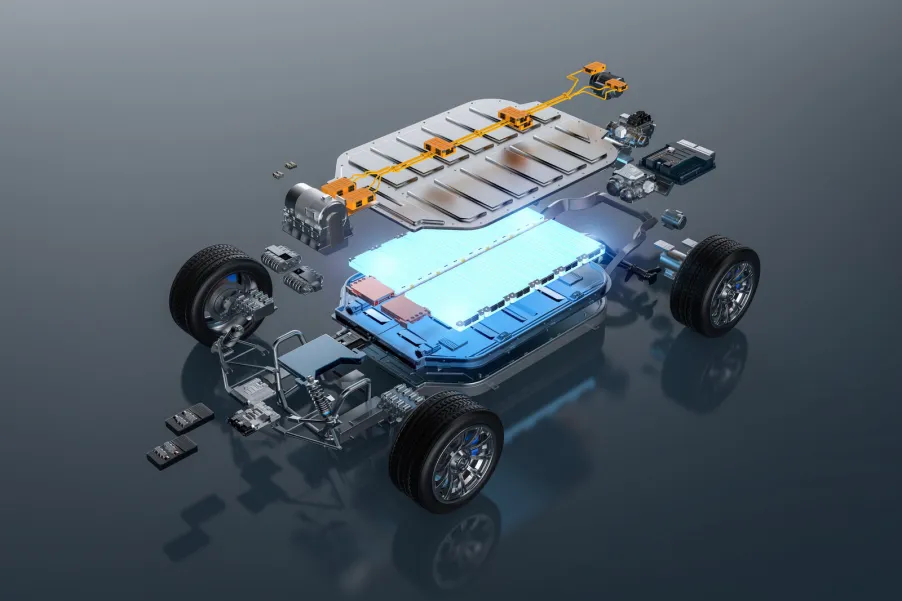
What makes this more than just another “cancelled trim” headline is what the Banshee represented under the skin. The production Charger Daytona launched with a 400-volt electrical architecture (R/T and Scat Pack), advertised peak DC fast-charge rates around 183 kW, and an official claim of roughly 20–80% in “just over” the mid-20-minute range on a robust DC charger. That spec looked serviceable on paper, but very average in a field where the fastest competitors lean on 800-volt systems.
The Banshee was supposed to be Dodge’s new Hellcat
Back in 2022, Dodge previewed the Charger Daytona SRT concept and teased the Banshee as the next-gen Hellcat—electric, brutal, and dripping with attitude. The subtext wasn’t subtle: Banshee would be the brand’s megaphone for speed, sound (via that controversial “Fratzonic” exhaust), and swagger in an EV age. Reports suggested the Banshee would bring the crucial 800-volt upgrade, a more exotic transmission, and four-figure horsepower potential—exactly the kind of tech that turns heads and zaps electrons. If this really is the end of Banshee, Dodge loses not only a headline number but its clearest technical path to parity with the quickest-charging crowd. MotorTrend+1
Why 800 volts mattered—far beyond bragging rights
Here’s the quiet truth about modern performance EVs: 0–60 times have been solved; charging is the new drag strip. Moving from 400V to 800V unlocks thinner cables, lower heat at the same power, more stable peak rates, and, in many cases, much shorter stops from 10–80%. That’s why Porsche Taycan, Lucid Air, many Hyundai/Kia/Genesis e-GMP models and even Tesla’s most recent halo products lean into higher-voltage strategies or equivalent fast-charge prowess. The Banshee’s rumored 800-volt system could have let the entire Charger lineup ride that rising tide over time. Without it, Dodge risks being stuck in the “it’s quick, but…” category whenever the road trip starts. (And yes, for the EV faithful, that “but” is the only spec that matters.)
Real-world results haven’t been kind to the current 400-volt Charger Daytona either. InsideEVs tried twice to hit Dodge’s claimed 20–80% window and couldn’t get close, abandoning one session after 47 minutes when speeds lagged. MotorTrend’s early testing painted a similar picture: 30 minutes added just 115 miles; a full top-off took 72 minutes. MT explicitly noted Dodge’s promise that an upcoming SRT variant would switch to 800 volts exactly the pathway many assumed Banshee would deliver. If that promise evaporates, so does the most straightforward fix to the car’s biggest weakness.
Did Dodge just kneecap its EV’s best future?
It’s not that the current Charger Daytona is a bad car. Far from it: reviewers have praised its shove, theater, and presence, even while dinging software rough edges and panel fit. Peak charge is listed around 183 kW fine, not stellar and in limited windows you can see decent ramp-ups. But consistent, short roadside stops remain the gold standard, and that’s where 800-volt systems shine. Absent Banshee, Dodge either needs a rapid 400-volt optimization program (thermal, curves, preconditioning, and station compatibility) or a different high-voltage strategy in the next rev. Otherwise, every cross-country comparison test will turn into a stopwatch reminder that the Charger can sprint like a hero and refuel like yesterday.
Why kill the program now?
Zoom out, and the alleged decision fits a broader Stellantis recalibration. With consumer EV demand wobbling and incentives shifting, Stellantis brands have re-embraced combustion in visible ways, from Ram’s plug-in pivot to continued Hemi life in select models. If the Banshee required bespoke components (and supplier commitments) for relatively low volume, the business case could have been fragile. That doesn’t make enthusiasts feel better, but it does explain the spreadsheet logic. Until Dodge says otherwise, the most we can say is the reports are consistent—and uncontradicted in substance by Dodge—across several reputable publications.
What the future might hold
There’s still a path forward. Dodge could:
- Ship a non-Banshee SRT with 800-volt hardware later, salvaging the charging story without the halo badge. (MotorTrend says Dodge floated this very idea when pressed on early charge results.)
- Double-down on the ICE side for the top-trim “muscle” identity leveraging Hurricane and Hemi buzz while positioning the EVs as the daily-usable, budget-friendly entries with simplified charging expectations.
- Or, ideally, do both: keep the muscle bravado alive for loyalists and quietly iterate the EV’s charging curve, thermal strategy, and software until “27 minutes, consistently” becomes real on mainstream networks.
For customers, the takeaway as of October 27, 2025 is simple: if you were waiting for the Banshee because you wanted Hellcat-level theater and 800-volt road-trip ease, don’t hold your breath. If you want the Charger Daytona for its looks, instant torque, and daily fun, the current trims still deliver that punch—just plan your fast-charge stops with a bit more patience than the brochures suggest. The Banshee may be dead, but the idea behind it an American EV that charges as hard as it accelerates—doesn’t have to be. Now it’s on Dodge to prove there’s still thunder in the forecast.
Related: 1,000+ Horsepower: The Definitive 2025 Buyer’s Guide for Track & Street