
If you asked early adopters to name the gateway drug of electric driving, they’d say it in unison: Nissan Leaf. The Leaf was the OG budget EV, the scrappy compact that proved electrons could replace gasoline for real, everyday people. Now, with the third-gen Leaf looming for 2026 rumored to bring a larger, liquid-cooled pack and a potential 300-mile range while clinging to a ~$30,000 MSRP the “cheapest 2026 EV” crown looks set. And yet… that crown shouldn’t even exist at $30k. Not in this market. Not with what EVs fundamentally are.
Why $30,000 Isn’t “Cheap” Anymore
Electric vehicles have fewer moving parts, fewer wear items, and far less routine maintenance than internal-combustion cars. On a per-mile basis, they’re typically cheaper to operate, too. Meanwhile, the bottom of the gas-car market has hollowed out: the $16,000 Mitsubishi Mirage and $17,000 Nissan Versa have been discontinued in the U.S., leaving ~$20,000 crossovers as the de facto entry point. That was a bright, blinking opportunity for an automaker to barge in with a truly budget EV and reset expectations. Instead, the cheapest 2026 EV is tracking toward $30k about $10,000 more than the moment demands.
The Missed Opportunity: Make the Cheapest Car in America an EV
Here’s the bold, simple play: build a compact, front-wheel-drive EV with a small battery tuned for ~100 miles of real-world range. Make it a two-seater if needed. Optimize materials. Assemble it where costs permit Mexico is an obvious candidate. Don’t cram in every feature; don’t chase range headlines. Instead, shock the market with an MSRP that starts with a 1 or a very low 2. Then upsell trims: a larger pack for commuters who need 200–300 miles, or a clever, serviceable range-extender module living in the frunk for road-trip insurance. Lead with the sticker price. Let options be the margin.
Would such a car sell? Absolutely. The base version would grab headlines and fleet buyers. City drivers, students, first-car shoppers, ride-share pros, and multicar households would flock to it. And those who genuinely need more range would step up. That’s how you scale electrification: with an irresistible floor, not just a prettier ceiling.
What the Cheapest 2026 EV Should Look Like
- Price: Target $20,000 base MSRP. No games.
- Layout: Compact hatch, FWD, simple steel wheels, durable cloth.
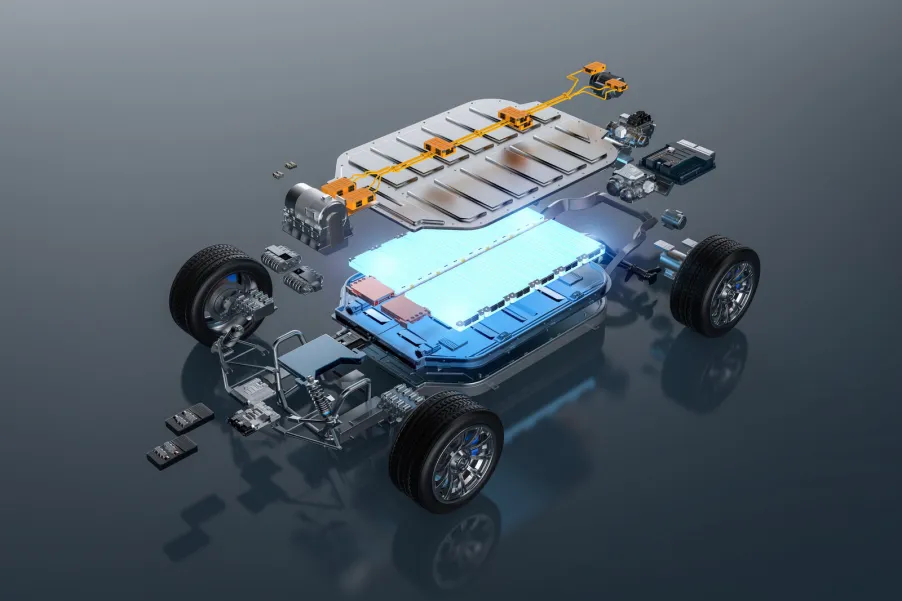
- Battery: ~30 kWh usable, liquid-cooled, 100-mile range target (urban cycle).
- Charging: 11 kW AC, honest 60–80 kW DC fast charge; 10–80% in ~30–40 minutes.
- Safety & Tech: Modern crash structure, basic ADAS (AEB, LDW), wired CarPlay/Android Auto—done.
- Upgrade Paths: 50–60 kWh long-range pack; optional frunk range-extender for hybrid flexibility without redesigning the car.
- Cost Discipline: Build in a lower-cost plant; standardize parts; limit configurations; design for easy service.
Keep the New Leaf—But Give Us a New Nameplate Too
To be clear, the incoming Leaf configuration sounds excellent and absolutely deserves to exist as a mainstream, midrange EV. Keep its name, its comfort, and its longer-range credentials. But Nissan or any bold automaker should also honor the Leaf’s budget-friendly legacy with a separate, truly historic $20,000 EV. That’s how you turn “cheapest 2026 EV” from a marketing phrase into a movement.
Right now, the cheapest EV slated for 2026 sits at ~$30,000. That’s progress just not enough. The car that electrifies the masses won’t be the one with the longest range; it’ll be the one with the shortest price. Until someone builds that, we’ll keep calling a $30k EV “cheap,” when the honest truth is: it’s still about $10,000 more than it should be.