Summary
Shopping electrified for the first time? This buyer’s guide compares battery electric vehicles (EVs) and plug-in hybrids (PHEVs) in plain language. We break down total cost of ownership (TCO), range and charging, incentives, warranties, and real-world use cases—then give you a simple framework to choose confidently.
Why this guide matters—fast
- Most charging happens at home. If you have off-street parking, a Level 2 (240-V) charger can make daily top-ups simple and fast.
- Public infrastructure is expanding. Tens of thousands of public charging stations now operate across the U.S., with steady year-over-year growth.
- TCO can favor EVs. Switching one household car to an EV can save roughly $500–$1,000/year in fuel plus lower maintenance, depending on local electricity and fuel prices.
- Battery durability is backed. Many EV batteries carry 8-year/100,000-mile warranties; modeling suggests 12–15 years of life in moderate climates.
EV vs PHEV: quick definitions
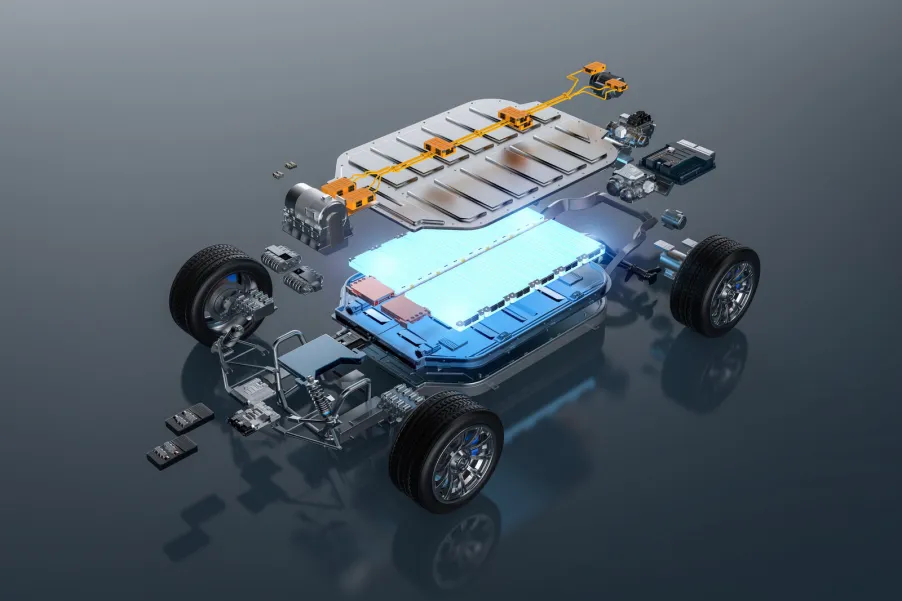
- EV (Battery Electric Vehicle): Powered solely by a battery and electric motor. You charge it via home or public charging. Range is listed as EPA all-electric range, tested under standardized procedures.
- PHEV (Plug-In Hybrid): Has a battery you can plug in and a gasoline engine. It lists two efficiency values: electric (MPGe) and gasoline (MPG), and can drive gasoline-only when the battery is depleted.
Head-to-head comparison
| Factor | EV (Battery Electric) | PHEV (Plug-In Hybrid) | Best for |
|---|---|---|---|
| Daily driving | Smooth, quiet; one-pedal feel; full torque | Electric around town; seamless gasoline backup | Commuters 20–80 km/day; city drivers |
| Range | Fixed by battery; plan charging on trips | Short electric range + long gas range | Mixed driving; infrequent charging |
| Fuel & maintenance | Lowest routine maintenance; electricity often cheaper per mile | Good when driven mostly on electricity; engine maintenance still applies | Budget-minded drivers who charge regularly |
| Home charging | Level 1 (120 V) works; Level 2 (240 V) recommended for convenience | Same; smaller battery recharges faster | Homeowners with off-street parking |
| Road trips | Plan around public fast chargers | Gasoline fills anywhere; no planning stress | Occasional long-distance travelers |
| Incentives | Federal/State incentives vary by model & content rules | Often eligible; rules differ | Price-sensitive buyers; fleets |
| Emissions | Zero tailpipe; upstream depends on grid | Near-zero in EV mode; gasoline when depleted | Eco-minded drivers with charging access |
Sources: EPA & DOE/AFDC guidance on EV/PHEV definitions, charging patterns, and infrastructure growth.
Total cost of ownership (TCO): the big picture
Fuel: The EPA estimates many households can save $500–$1,000 per year in fuel by switching one car to an EV—often more if you charge off-peak or have rooftop solar. PHEVs save most when they’re charged daily and used primarily in electric mode.
Maintenance: EVs have fewer moving parts and no oil changes. PHEVs still need engine service, so their maintenance sits between EVs and conventional cars.
Home charging: Level 1 (standard 120-V outlet) adds ~3–5 miles of range/hour—fine for light use. Level 2 (240-V) is the sweet spot for most households; utility rebates and local permitting vary.
Public charging: For most owners, home is primary; public networks supplement road-trips and apartment/condo living. The U.S. network has expanded steadily in ports and sites, reducing range anxiety each year.
Battery life & warranties: Many automakers back traction batteries for 8 years/100,000 miles, and national lab modeling suggests 12–15 years in moderate climates. Some states (e.g., CARB programs) have longer emissions-related battery coverage. Check the specific warranty booklet.
Incentives and tax credits: what changed in 2025?
- New Clean Vehicle Credit (IRC §30D): Eligibility depends on income caps, MSRP caps, final assembly, and critical mineral/battery sourcing. IRS guidance clarifies that vehicles acquired after September 30, 2025 are generally ineligible under current law; vehicles placed in service after that date must have been acquired by Sept 30, 2025 under a binding contract. Always verify the latest model-specific eligibility at purchase.
- Point-of-sale transfer & dealer reporting: Dealers must submit an accepted seller report within three days and provide you a copy—this helps ensure you get the credit at the time of sale if eligible.
- Commercial fleets: Businesses may qualify under the Commercial Clean Vehicle Credit (IRC §45W)—rules differ from consumer credits (no income limits; based on vehicle weight/type and battery). Timing and acquisition rules apply.
Disclaimer: Incentives change frequently and are not financial advice. Confirm eligibility with a tax professional and consult the IRS pages above at the time you buy.
A simple decision framework for EV and plug-in hybrid buyers
Choose an EV if…
- You have reliable home charging (garage/driveway) and can install/use a 240-V outlet or wall box.
- Your daily round-trip fits within the car’s rated range with buffer (typical U.S. commuting plus errands).
- You want the lowest routine maintenance and are comfortable planning charging on road trips.
Choose a PHEV if…
- You can charge most nights, but want gasoline backup for longer, unplanned journeys.
- Your commute fits the electric-only range, and you’ll actually plug in—that’s crucial for TCO and emissions benefits.
- You need a bridge technology while your local public charging build-out continues.
Practical steps / checklist
- Map your real usage
- Average weekday km and peak weekend trips.
- Parking setup (outlets? panel capacity?).
- Road-trip patterns (frequency, corridors).
- Audit charging options
- Home: Is a 240-V circuit feasible? Ask your electrician + utility about rebates and permitting.
- Public: Check station density along your commute/route; understand network memberships and pricing.
- Model your TCO
- Electricity rate (off-peak?), gasoline price, annual miles.
- Include maintenance assumptions (EV lower; PHEV mid).
- Verify incentives at the VIN level
- Confirm §30D/§45W eligibility, annual limits, dealer reporting, and any state rebates at the time of purchase.
- Check battery warranty & degradation protections
- Look for 8-yr/100k-mi minimum; read what’s covered (capacity loss thresholds, exclusions).
- Test-drive both
- Compare EV’s instant torque/regen feel with PHEV’s transitions between electric and engine power.
- Plan your first month
- Set a charging routine, download apps, and keep a physical backup plan (e.g., charging card) for peace of mind.
Common mistakes & how to avoid them
- Not installing (or using) home charging. A PHEV that rarely plugs in behaves like a heavier gas car; an EV without a home plan becomes inconvenient. Solve this first.
- Overestimating public charging needs. Most EV owners charge at home; public stations are for trips and gaps. Set realistic expectations.
- Ignoring VIN-level incentive rules. Eligibility hinges on content, MSRP, and income caps. Always verify before signing.
- Assuming batteries lack protection. Read the warranty booklet; many cover 8 yrs/100k mi, and real-world life can exceed a decade in moderate climates.
- Skipping the TCO math. Fuel savings are real, but driving/charging behavior determines who wins (EV vs PHEV) in your household.
FAQ
1) What’s better for range anxiety: EV or PHEV?
If you can’t yet rely on fast-charging along your routes, a PHEV’s gasoline backup eliminates anxiety. If you have home charging and predictable routes within the EV’s range, an EV with occasional public fast-charging works well.
2) How long do EV batteries last?
Automakers commonly warranty traction batteries for 8 years/100,000 miles; modeling indicates 12–15 years in moderate climates. Usage and temperatures matter.
3) Do PHEVs really save fuel?
Yes—when charged daily and driven within their electric range. If you ignore the plug, you’ll burn fuel like a conventional car (and tote extra battery weight).
4) How accurate are EPA range/MPGe numbers?
The EPA tests new vehicles under standardized lab cycles; your results vary by speed, temperature, terrain, and accessories. Use the label to compare models consistently.
5) What does a home Level 2 charger involve?
A dedicated 240-V circuit and wall unit or 240-V outlet for a portable EVSE. Installation complexity and cost depend on your panel and distance; check local rebates.
6) Which incentive applies to fleets?
Businesses should examine the Commercial Clean Vehicle Credit (45W); it differs from consumer credits and can apply to light-duty EVs and PHEVs.
7) What’s the state of U.S. charging in 2025?
Public charging port counts continue to climb across all states, with steady growth in both stations and connectors nationwide.
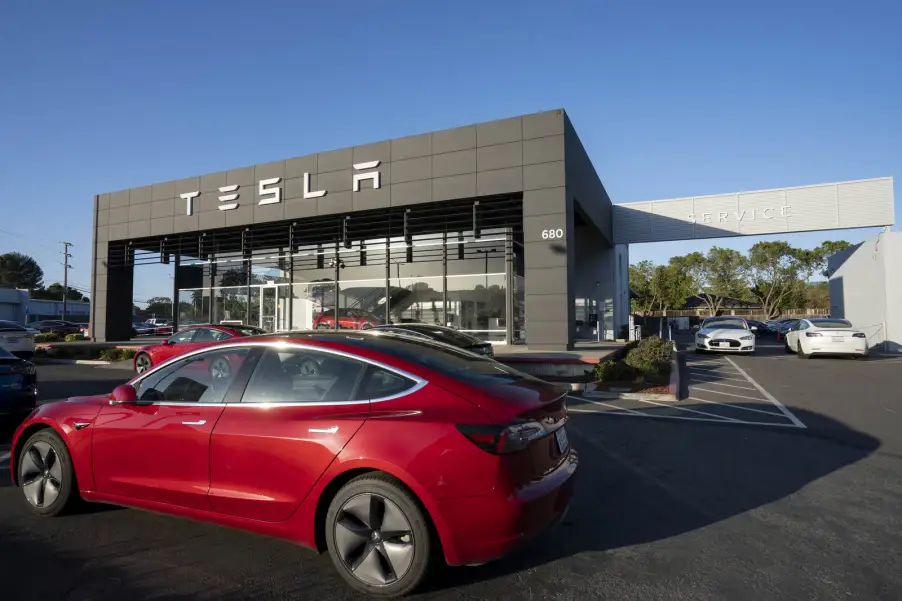
Related: Tesla Model 3: Buyer’s Guide for Eco-Conscious, Cost-Savvy Commuters
Conclusion
Electrification isn’t a monolith, it’s a spectrum. If you have home charging and predictable daily mileage, EVs deliver the quietest drive, the simplest maintenance, and compelling fuel savings. If you need a safety net for irregular long trips or lack reliable fast-charging along your routes, PHEVs are a pragmatic bridge—provided you plug in nightly. Start with your commute and parking, confirm incentives at the VIN level, and test-drive both. The right choice is the one that fits your life—and your budget—today.