Summary
The Electric Dodge Charger (Charger Daytona) is the first all-electric muscle car to reach U.S. streets, delivering standard AWD, blistering acceleration, and the retro-styled attitude Dodge fans expect—without tailpipe emissions. This guide explains trims and specs, what range and charging look like in the real world, who the Charger fits best, and how to shop it smartly if you’re weighing it against other performance EVs. We cite official data and reputable road tests and include a practical checklist and FAQ so you can buy with confidence.
What is the “Electric Dodge Charger”?
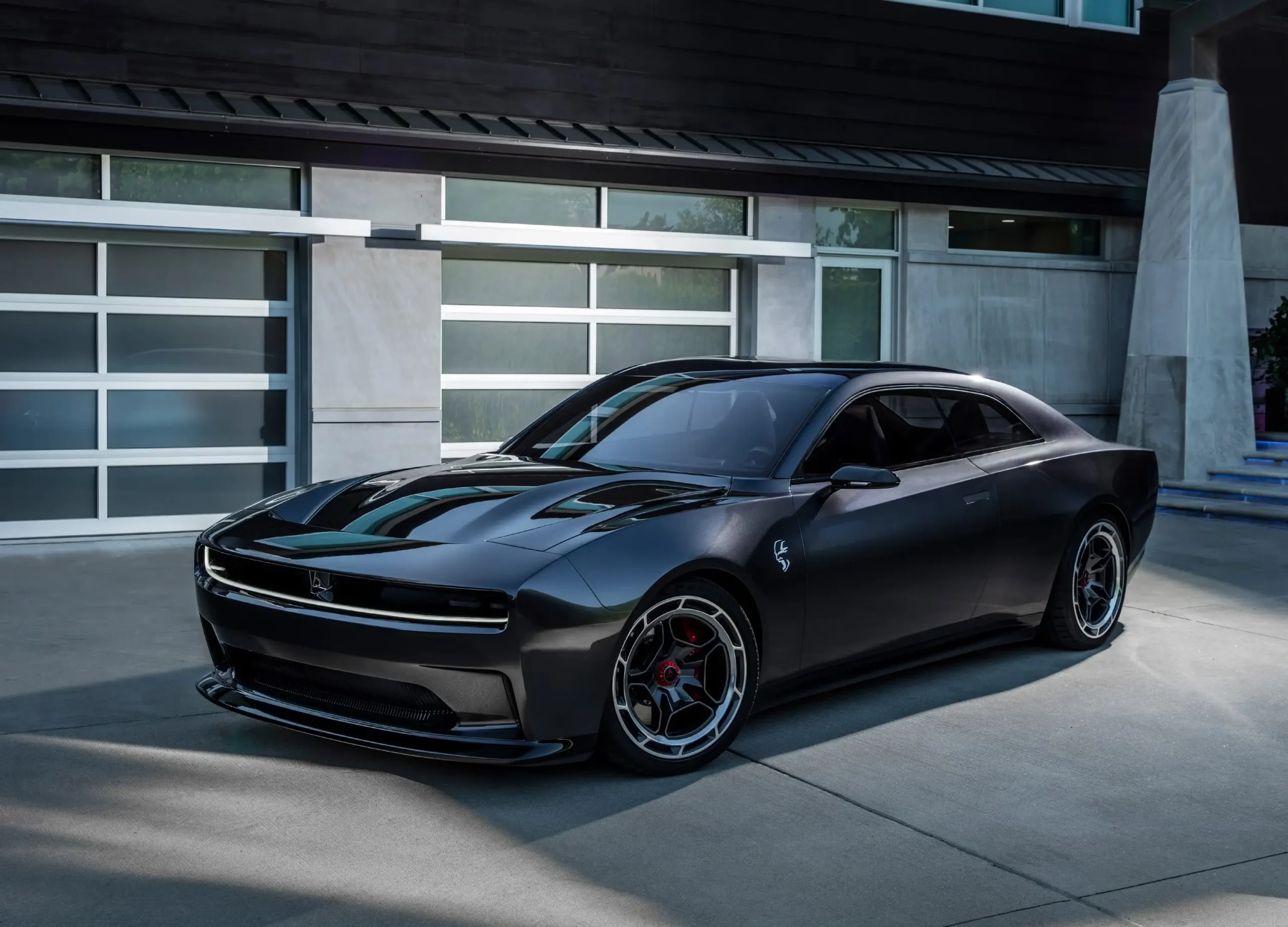
Dodge’s next-gen Charger, sold as the Charger Daytona, sits on Stellantis’s STLA Large platform and debuts as a battery-electric, AWD, two-door muscle coupe with available four-door models to follow. Its mission is straightforward: keep classic American muscle swagger while moving to electrons and software-rich performance. The Scat Pack version currently headlines with 670 hp, 3.3-second 0–60 mph times, and an estimated 11.5-second quarter-mile. AWD is standard.
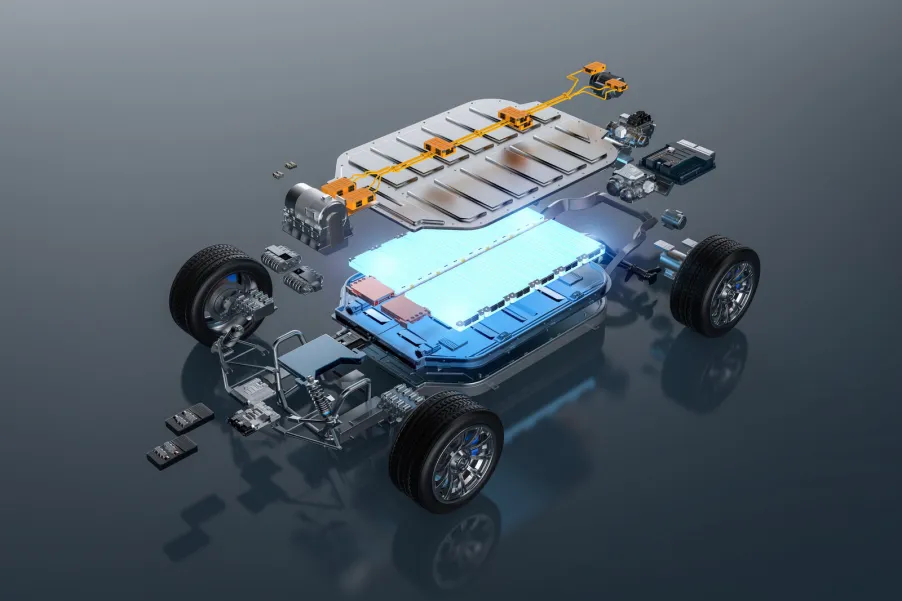
Underneath, STLA Large supports 400-volt and 800-volt electrical architectures, large battery packs (up to ~118 kWh potential on the platform), and fast DC charging capability—the building blocks for high-output EVs like the Charger.
Trims at a Glance (2025 MY)
Dodge sells two primary Electric Charger Daytona grades:
- Daytona R/T – The “entry” performance EV Charger with lower output than Scat Pack but the same AWD character and visual drama. (Dodge positions it as ~496 hp in earlier communications; final on-sale specs may vary by build.)
- Daytona Scat Pack – The halo EV Charger for now: 670 hp, 3.3s 0–60, 11.5s quarter-mile (est.), 627 lb-ft.
Range & Efficiency: Early independent coverage has estimated the Scat Pack around 241 miles EPA with a ~100.5-kWh battery; Dodge’s broader communications have cited ~260–317 miles across electric Charger variants depending on configuration. Expect the R/T to post the longer range of the two. Always verify the EPA label for your exact build.
Charging: Dodge claims 20–80% in just over 27 minutes on DC fast charging; tests have seen ~183 kW peak with real-world charge-rate variability (as with many new-to-market EVs). Platform targets suggest up to ~4.5 kWh per minute possible on 800-V variants, but the Charger’s production configuration and station conditions dictate your real results.
Electric Dodge Charger Daytona R/T vs. Scat Pack
| Item | Daytona R/T (2025 est.) | Daytona Scat Pack (2025) |
|---|---|---|
| Drivetrain | AWD | AWD |
| Power | ~496 hp (manufacturer comms) | 670 hp (official site) |
| 0–60 mph | Low–3s to mid–3s (est.) | 3.3 s (est.) |
| Quarter-mile | — | 11.5 s (est.) |
| EPA Range | ~300 mi class (est.) | ~241 mi EPA shown in listings |
| Battery | ~100 kWh class (reports) | ~100.5 kWh (Edmunds listing) |
| DC Fast Charge | 20–80% ~27 min (claim); ~183 kW peak reported | Same |
| Platform | STLA Large (400V/800V capable) | STLA Large (400V/800V capable) |
Sources: Dodge.com performance/specs; Edmunds specs page; Stellantis platform releases; third-party road tests/estimates. Always confirm the exact EPA range/charge capability for your VIN.
Why the Electric Charger Appeals to Performance EV Shoppers
It’s quick, loud (by design), and controllable. The Scat Pack hits 3.3 seconds to 60 mph, and Dodge uses active sound (the “Fratzonic” system) to keep the theater that muscle buyers expect. Standard AWD helps put power down and extends the driving season in colder states.
It keeps the muscle-car stance. Where many EVs chase slippery crossover shapes, the Charger stays a low, wide coupe/sedan with vintage cues. You buy it because you want a muscle car—and you still get one, just electric.
It rides on a future-ready platform. STLA Large is designed for large D/E-segment vehicles and supports both 400-V and 800-V setups, large batteries, and upgrades over time. That should help with longevity and serviceability as the EV market evolves.
Where It May Fall Short
Range vs. rivals. Performance EVs trade range for power and tire grip. The Scat Pack’s ~241-mile EPA figure shown in listings undercuts some AWD sport sedans and performance crossovers. If you do regular 250–300-mile highway runs, this matters.
Charging curve maturity. Early third-party fast-charge tests show variability, including an instance of a brief drop in charging power mid-session before recovering—common with first-year EVs, and often improved via software. Evaluate how the Charger charges on your local networks before you buy.
Trim uncertainties at the extreme. Reports indicate an ultra-high-performance Banshee variant may be in flux. If you were holding out for a ~1000-hp flagship, watch the news and official pages for confirmation before planning a future order.
Real-World Range & Charging: What to Expect
- Highway vs. city: EVs tend to post better efficiency in city/suburban use (regen braking, lower aero drag) and worse at 75–80 mph. A Scat Pack with sticky tires will likely skew toward the lower end of its range at interstate speeds.
- Winter impact: Cold weather reduces range. Pre-conditioning the cabin and battery, plus using heated surfaces instead of blasting HVAC, can save miles. (This is EV-common behavior; confirm Dodge’s official owner guidance at delivery.)
- DC fast charging: Dodge cites 20–80% in just over 27 minutes on a capable CCS fast charger, with third-party testing observing ~183 kW peaks and real-world variability. Software updates can refine the curve; check for the latest firmware on test drives.
Practical Steps / Checklist (U.S. Buyers
- Decide your trim by use-case.
- Choose Scat Pack if you want maximum theater and track-day thrills.
- Choose R/T if you want longer range, lower cost, and still-quick performance.
- Validate local charging. Map CCS stations on your commute and weekend routes. Perform one live session during your test drive to check authentication, cable reach, and charge rates at your typical site. (Fast-charge experience varies by site.)
- Plan Level-2 at home. Install a 240-V charger (with a licensed electrician) and verify your panel capacity. Level-2 home charging turns the Charger into a “full tank every morning” car. (Edmunds lists ~9.9 hours on 240V for Scat Pack.)
- Check tire strategy. Sticky summer rubber elevates handling and 0–60 but reduces efficiency and winter traction. Ask for an all-season/winter set if you live in snow states.
- Budget for insurance. High-output EVs can bring higher premiums. Quote early; price differences between trims can be meaningful.
- Look for software updates. Ask the dealer to apply the latest firmware; charging behavior and drive-mode tuning often improve post-launch.
- Confirm tax credits/rebates. Federal and state incentives change frequently and depend on final assembly, MSRP caps, and your tax situation. (This is not tax advice; consult a tax professional.)
Common Mistakes & How to Avoid Them
- Mistake: Buying solely on 0–60 times.
Fix: Factor range, charging access, and tire wear into total ownership. The Scat Pack is thrilling, but the R/T may suit longer commutes. - Mistake: Overlooking home electrical capacity.
Fix: Have an electrician assess panel space and circuit load before you sign; schedule any upgrade with your delivery date. - Mistake: Assuming every fast charger is identical.
Fix: Test your local station; note peak kW, session reliability, and costs. Consider a backup network (e.g., a second membership/app). - Mistake: Expecting muscle-car sound without context.
Fix: The Charger uses an engineered exhaust note; check whether you like the Fratzonic experience at different drive modes before buying. - Mistake: Ignoring platform details.
Fix: STLA Large supports 400V and 800V; understand what your VIN actually uses and how that affects charging speeds and future accessories.
FAQ
1) Is the Electric Dodge Charger really quicker than the old Hellcat?
Dodge says the next-gen Charger posts faster 0–60 times than the Hellcat Redeye, with the Scat Pack rated at 3.3 seconds. That’s traction-aided by standard AWD. Track surface, tires, and temperature still matter.
2) What’s the real EPA range?
Edmunds shows the Scat Pack at ~241 miles EPA with a ~100.5-kWh battery; R/T is expected to be higher. Check the window sticker of the exact car you’re buying, as wheel/tire choice and options can move the number.
3) How fast does it charge on a road trip?
Dodge cites 20–80% in just over 27 minutes on a compatible DC fast charger. Independent tests have reported ~183 kW peaks and some session variability. Expect improving curves via software.
4) Is there a four-door Electric Charger?
Dodge has previewed a multi-energy lineup with two- and four-door body styles, but confirm timing and trims with your dealer’s allocation and the official site before ordering.
5) What happened to the “Banshee” model?
Recent reporting suggests the ultra-high-output Banshee EV may be canceled or paused. Dodge has not issued a definitive public confirmation. If you want the top spec available now, shop the Scat Pack.
6) Does the Charger use 800-volt tech?
STLA Large supports both 400V and 800V; Dodge hasn’t universally specified that all Charger builds are 800V. Your charge rates depend on hardware, software, and the station.
7) How does it compare to a hybrid muscle car or a V8?
The electric Charger wins stop-light sprints and daily smoothness, but hybrids/V8s offer quick refueling and familiar road-trip rhythms. Your choice hinges on charging access, commute length, and whether you value EV torque and lower operating emissions over gas convenience.
Related: Dodge Charger EV — Buyer’s Guide for Muscle-Car Fans and EV-Curious Shoppers
Conclusion
The Electric Dodge Charger proves that EVs can carry the torch for American muscle. The Scat Pack is a straight-line monster with genuine theater, while the R/T looks poised to be the smarter daily buy for range and cost. What makes or breaks your ownership experience isn’t just 0–60, it’s charging access, tire strategy, and how you drive.
If you want a head-turning performance EV with classic Charger attitude and modern AWD grip, put the Daytona on your short list and test it where you plan to use it: your commute, your nearest DC fast charger, and your favorite backroad. Bring data home (charge logs, energy use), compare against rivals, and buy the trim that fits your life, not just your launch-mode fantasies.