Summary
If you’re weighing a hybrid vs. a full EV—or you’ve just bought your first electric car understanding charging is the clearest path to low running costs and less range anxiety. This guide explains home, workplace, and public charging in plain English, compares Level 1, Level 2, and DC fast charging, shows what it costs in the U.S., and adds model-specific notes for the all-electric Dodge Charger Daytona. You’ll find concrete checklists and mistakes to avoid, plus links to current U.S. data and standards for trust and transparency.
Why charging literacy matters (especially if you’re cross-shopping hybrids)
Eco-conscious commuters and cost-savvy shoppers often start with hybrids for simplicity: you fuel like normal and recoup MPG gains. EVs flip that script—you “fuel” mostly at home while you sleep, at your workplace during the day, or at a DC fast charger on a road trip. The payoff can be big: convenient “full tank” every morning, predictable energy prices, and less maintenance. But you’ll want the right mix of charging options for your life stage, commute length, housing situation, and vehicle.
EV charging levels, explained in 60 seconds
- Level 1 (120V household outlet): Slow but simple. Adds roughly 3–5 miles of range per hour—best for low-mileage drivers or overnight top-ups. Uses the SAE J1772 vehicle inlet (for AC) on most non-Tesla EVs.
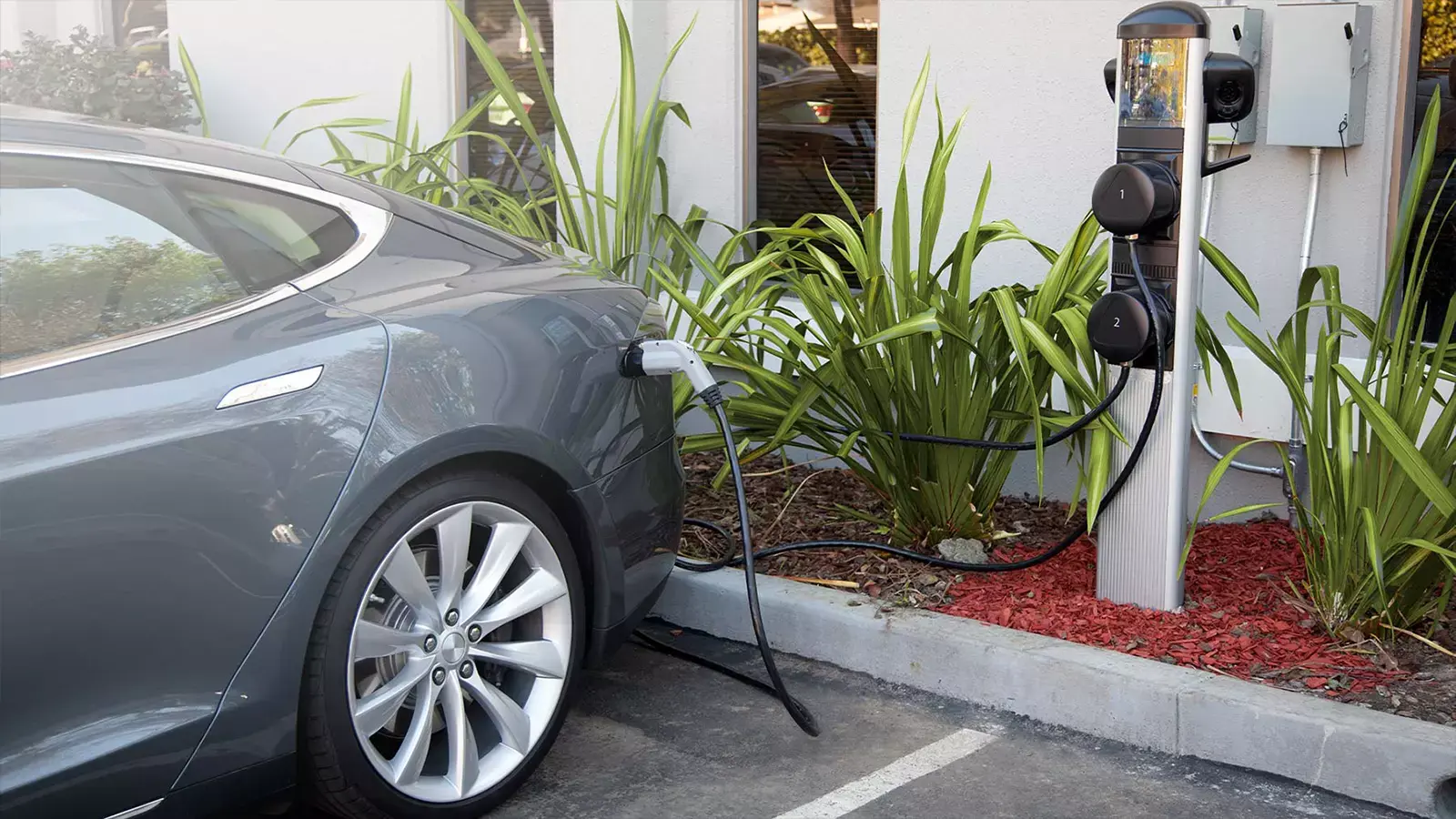
- Level 2 (240V home/workplace/public): The sweet spot for daily driving. Adds ~20–40+ miles of range per hour depending on the charger and your car’s onboard charger (many EVs accept 7.2–11 kW). Often a dedicated 240V circuit in your garage or a managed charger at work.
- DC Fast Charging (public “Level 3”): For highway travel. Charges from 20–80% in roughly 20–45 minutes depending on your car’s max rate and the station’s power. Connectors now include CCS, CHAdeMO (legacy), and SAE J3400 (NACS) as the U.S. standard shifts.
Connector note (2025): SAE standardized Tesla’s plug as J3400 (NACS) in late 2023; most automakers plan native J3400 ports from the 2025 model year, and major networks are adding J3400 cables. Adapters bridge CCS↔J3400 in the interim.
At-a-glance comparison (time & use case)
| Charging Level | Typical Power | Best For | Realistic Time Window* |
|---|---|---|---|
| Level 1 (120V) | ~1.2–1.9 kW | Low daily miles; overnight top-ups | Roughly 10–20% battery added overnight |
| Level 2 (240V) | ~6–11 kW (home/work) | Daily charging for most owners | ~4–10 hours from low to ~80% |
| DC Fast Charging | 50–350 kW (vehicle-limited) | Road trips; quick boosts | ~20–45 min from 20%→80% |
*Times vary by battery size, vehicle limits, temperature, and sharing at the station. For U.S. government time ranges, see DOT’s EV basics and DOE Energy Saver guides.
What it costs (U.S.)
- Home: You pay your utility’s residential kWh price. The latest national average is about 17–18¢/kWh (varies widely by state). On that average, a 300-mile EV with ~30–35 kWh/100 miles costs ≈$5–$6 for 100 miles at home. Check your state’s rate to refine.
- Workplace: Often free or subsidized as an employee perk; some employers set a modest per-kWh rate. DOE has guidance for employers planning fair, reliable programs.
- Public Level 2: Frequently free at libraries, hotels, and campuses, or priced similarly to home after parking fees.
- DC fast charging: Usually pricier (per kWh or per minute) because of demand charges and hardware costs. Great for trips; expensive for daily use.
Special call-out: The Electric Dodge Charger Daytona (charging facts that matter)
Dodge’s new electric Charger Daytona uses a 400-V architecture with an 11 kW onboard AC charger and a peak DC fast-charge rate around 183 kW. Dodge and independent tests estimate ~27–33 minutes for a 20–80% session on a capable DC fast charger, battery permitting. Battery capacity is around 100.5 kWh (gross; ≈94 kWh usable reported in some tests). Translation: plan on Level 2 at home for daily use and DC fast charging for road trips.
Connector: Stellantis has announced adoption of SAE J3400 (NACS) in North America, so expect growing native support and/or adapters depending on build date and trim. Always confirm your vehicle’s port and available adapters.
Choosing your charging mix by lifestyle
Apartment & condo dwellers
- Primary strategy: Aim for workplace Level 2 or reliable nearby public Level 2. Consider DC fast only for weekly top-ups or road trips.
- Tip: Ask your HOA or property manager about adding shared Level 2 with simple billing and access controls; DOE has step-by-step workplace/property guidance to share with them.
Suburban commuters with a garage
- Primary strategy: Install a Level 2 (240V) unit on a dedicated circuit sized to the car’s onboard charger (often 40–48A breaker for 32–40A charging).
- Result: Wake up full each day. DC fast is optional for trips.
Long-distance travelers
- Primary strategy: Map routes around reliable DC fast corridors; precondition your battery when possible to hit peak speeds.
- Pro tip: Many cars throttle above ~80% on DC fast; plan shorter, more frequent 20→70% hops.
Small-business & fleet operators
- Primary strategy: Mix of depot Level 2 (overnight), workplace Level 2 (daytime), and select DC fast for turnaround.
- Programs: Utility “make-ready” and federal/state incentives can lower install costs; check DOE/utility portals.
Practical Steps / Checklist
- Audit your miles. Tally a typical week. If you drive ≤40 miles/day, Level 1 might suffice; ≥40–60 miles/day, target Level 2.
- Confirm your vehicle limits. Note your onboard AC charger (kW) and DC fast peak (kW). For the Charger Daytona: AC ≈11 kW; DC ≈183 kW.
- Decide home vs. workplace priority. If your employer offers charging, you may use a smaller home install or postpone it.
- Get an electrician quote. For Level 2, you’ll likely need a 240V circuit, a matching breaker, and either a plug-in (NEMA 14-50) or hardwired EVSE.
- Pick a J1772 or J3400 solution. Check your car’s port. If you own CCS/J1772 but want Supercharger access, verify certified adapters and network support in your area.
- Shop your electricity rate. Look up your state’s average residential price to estimate per-mile cost. Time-of-use plans can reduce cost if you charge off-peak.
- Set schedules. Use your car/app to charge after 9 p.m. or utility off-peak windows.
- Plan road trips smartly. Favor stations that match your vehicle’s max; arrive ~10–20% SOC; depart ~70–80%.
- Learn public charging etiquette. Don’t camp at fast chargers; move when your taper slows.
- Keep a backup. Carry the portable Level 1 cord; save multiple charging apps and RFID cards.
Common Mistakes & How to Avoid Them
- Relying on DC fast for daily charging. It’s costly and harder on batteries. Use Level 2 at home/work for routine needs.
- Oversizing (or undersizing) the home charger. If your EV only accepts 7.2 kW AC, a 19.2 kW EVSE won’t speed it up. Match EVSE output to your car’s onboard charger.
- Ignoring the connector transition. The U.S. is moving toward SAE J3400 (NACS). Before buying hardware, confirm cable type, adapter availability, and certification (UL).
- Forgetting electrical capacity. Many garages need panel upgrades or load management for a 40–60A circuit. Get an electrician’s load calc.
- Not checking site power at DC fast. A 350-kW pedestal doesn’t guarantee your car’s peak rate—or that power isn’t shared. Check app details and recent check-ins.
- Assuming EV = zero “fuel” cost. U.S. electricity averages vary by state and season. Revisit rates yearly.
Real-world snapshot: Electric Dodge Charger owner scenarios
- Daily: Plug into Level 2 at home (40A/48A EVSE). With an ~11 kW onboard charger, you can add ≈35–40 miles of range per hour—enough to refill a typical day in a couple hours.
- Weekly: If home charging is unavailable, two workplace sessions (3–4 hours each) typically cover a standard commute week.
- Road trip: Target stations where your Charger can see ~183 kW peaks. Plan 20→80% stops of ~27–33 minutes depending on conditions. If a queue exists, two 15–20 minute hops may be quicker than one 45-minute session.
FAQ
1) What’s the difference between J1772, CCS, and J3400 (NACS)?
J1772 is the AC connector used for Level 1/2 charging on many EVs. CCS (a J1772 “combo”) adds two DC pins for fast charging. J3400 (NACS) is the newly standardized Tesla-style connector that supports both AC and DC in one compact plug; most automakers are adopting it for North America from MY2025 onward. Adapters and mixed-cable stations are easing the transition.
2) How long does Level 2 take at home?
Per DOT’s EV basics, Level 2 can take ~4–10 hours from low to a high state of charge, varying by battery size and onboard charger. Many owners schedule overnight to finish before the morning commute.
3) Will a 350-kW charger fill my car faster?
Only up to your car’s max DC rate and within its thermal limits. For example, the electric Dodge Charger’s peak is ~183 kW; it won’t draw 350 kW even if the station can provide it.
4) How much will I pay to charge at home?
Multiply your kWh/100 mi by your ¢/kWh rate. With a national average around 17–18¢/kWh and many EVs using ~30–35 kWh/100 mi, you’re near $5–$6 per 100 miles. Your local utility rate can swing this up or down.
5) Is DC fast charging bad for the battery?
It’s fine for trips, but frequent high-rate fast charging can accelerate degradation compared with steady Level 2. Follow your manufacturer’s guidance and favor Level 2 for daily use.
6) I’m choosing between a hybrid and an EV—what should I consider on charging?
If you can’t reliably access home or workplace Level 2, a hybrid may fit better today. If you can, an EV’s convenience and predictable energy costs often win. Confirm connector type and regional DC fast coverage before deciding.
7) Will my next EV use J3400 (NACS)?
Most automakers targeting the U.S. market have announced the transition starting in MY2025. Confirm your exact model year and trim before purchasing home hardware.
Related: Automakers EV: Buyer’s Guide to Brands, Range, Charging & Prices
Conclusion
Understanding the charging needs of EV drivers isn’t just about plugs and kilowatts, it’s about matching your daily rhythm to the right mix of Level 1, Level 2, and DC fast charging. Apartment dwellers may lean on workplace and public Level 2; suburban commuters thrive with a 240V home install; long-distance travelers master 20→80% fast-charge waypoints. The Electric Dodge Charger illustrates the modern EV reality: quick DC peaks around 183 kW for the highway, and dependable 11 kW Level 2 at home for everyday life. Get the basics right, and you’ll enjoy lower fuel costs, fewer stops, and a calmer ownership experience—no matter which badge you choose.