
Pump the brakes, because things just got weird in a fun, risky, very-Ford way. For weeks, the internet’s been buzzing about a Ford $30k truck that could reset expectations for entry-level EVs. Then CEO Jim Farley poured a fresh cup of confusion: the first vehicle on Ford’s all-new platform is a mid-size truck, but it’s “really not a pickup”—a “new silhouette.” That single phrase reframed the whole project: forget a traditional bed-on-frame feel; think spacious, slippery, purpose-built EV that borrows the best of crossovers and compact trucks.
Ford new $30k truck isn’t really a pickup
Here’s the backbone. Ford is investing about $5 billion split between retooling the Louisville Assembly Plant (Kentucky) and scaling BlueOval Battery Park (Michigan) to build a new family of affordable EVs launching in 2027 starting with this $30k “not-quite-pickup.” The vehicle will ride on Ford’s Universal EV Platform, a ground-up architecture focused on cost, simplicity, and scale.
Farley says the shape is new, the mission is clear: more interior room than a Toyota RAV4, yet priced like a budget compact. That’s a shot at America’s volume leader in the “do-everything” segment and a signal that Ford is optimizing cabin space over classic truck silhouette. Expect a fast, fun, rear-wheel-drive base configuration aimed squarely at daily utility and urban/suburban versatility not rock-crawling or heavy towing.
Under the skin, Ford’s cost attack is as interesting as the vehicle itself. The platform and production system emphasize fewer parts, shorter wiring, and parallel sub-assembly—an “assembly tree” approach that builds large modules (including big aluminum uni-castings) off-line and snaps them together. The payoff is lower factory complexity, faster build times, and a price target that undercuts many mainstream EVs. Think “Model T moment,” but for modern electrics.
What “$30k truck” really means for buyers
If you hear “$30,000 truck” and picture a traditional pickup with a six-foot bed and transfer case, reset your expectations. Based on what Ford has shared so far:
- Silhouette-first utility: The vehicle blends crossover practicality with trucklike usefulness. It’s expected to have the passenger room of a top-selling compact SUV with a cargo solution that isn’t a conventional bed. The goal is everyday usefulness, not contractor-grade payloads.
- RWD dynamics, EV quickness: Farley has teased a fun-to-drive character. Even the cost-cutter trims should feel lively thanks to instant torque and low center of gravity.
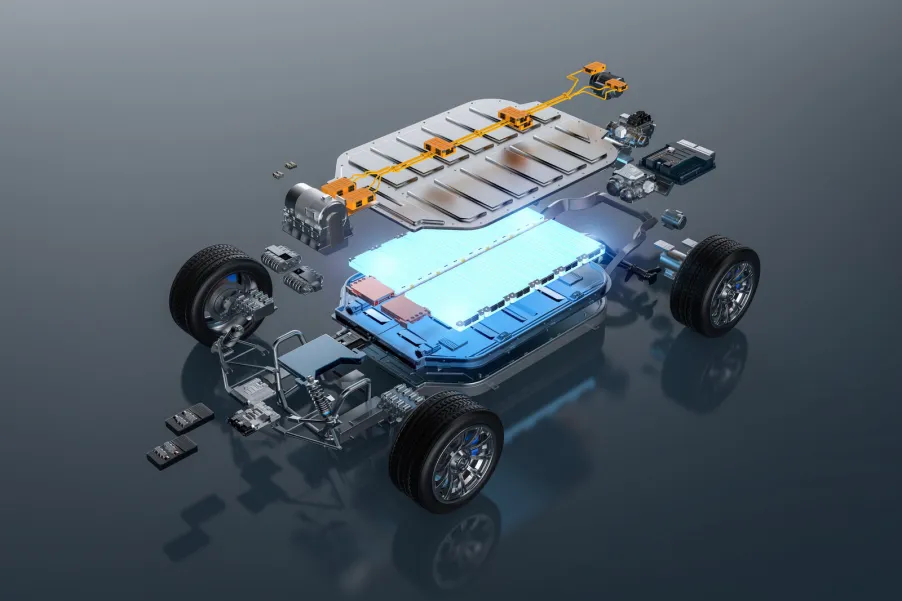
- Battery-as-structure thinking: Reporting around Ford’s platform points to LFP batteries (cheaper, durable) and weight/part-count reductions that help hit the $30k price. Some coverage describes the pack integrated as a structural floor key to the spacious cabin and crisp handling.
- 2027 timing, U.S. build: Ford says Louisville is the launch site, backed by the BlueOval battery supply chain in Michigan critical for cost and availability.
Put differently, this “truck” is Ford’s bet that the next mainstream EV isn’t a scaled-down F-150; it’s a right-sized commuter-hauler with smart packaging and a price normal people can stomach.
Why Ford is taking this risk (and why it might work)
Ford’s EV strategy is shifting toward smaller, cheaper, and faster-to-build vehicles. The company has delayed some big-ticket EVs to 2028, while pushing hard on this affordable platform to compete with low-cost rivals. A $30k sticker is the headline, but the real story is manufacturing: 20% fewer parts and 40% fewer workstations are the kinds of deltas that make pricing power possible. If Ford nails it, the brand can sell an EV at Corolla money with crossover space and EV punch—catnip for cost-conscious buyers.
There’s still plenty of uncertainty. Farley himself admits there’s “a lot of risk” in the novel design and manufacturing approach. Big castings, parallel sub-assemblies, a new silhouette—these are ambitious moves that could hit snags during tooling, crash validation, or supplier ramp. And calling it “not a pickup” risks confusing traditional truck shoppers who equate utility with a box in back. But Ford seems comfortable courting a new kind of buyer: someone who wants Maverick-like footprint, RAV4-like room, EV efficiency, and a monthly payment that doesn’t sting.
The SEO bottom line for “Ford $30k truck”
If you’re researching the Ford $30k truck, here are the anchor facts to know and watch:
- Price target: About $30,000 starting MSRP.
- Launch window: 2027 start of production, Louisville, KY.
- Platform: New Universal EV Platform with major parts and station reductions.
- Powertrain: Rear-wheel drive base; performance positioned as “fun,” not fleet. (AWD not yet confirmed.)
- Packaging: More interior room than Toyota RAV4; a new silhouette that’s “really not a pickup.”
- Manufacturing & jobs: About $5B in combined investments across Louisville Assembly and BlueOval Battery Park Michigan.
Conclusion
Ford is betting that mainstream EV adoption hinges on price and practicality, not bed length. If the company can mass-produce this new silhouette at $30k—while delivering the promised space and driving fun, it could redefine what “entry-level electric truck” means in America. If not, well, Farley already said it: there’s a lot of risk.