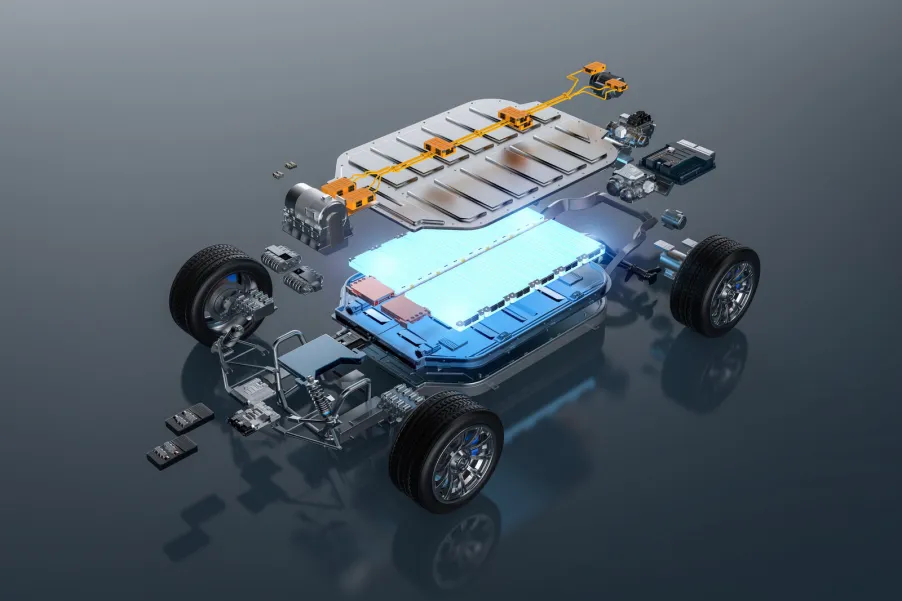
A wave of new cell chemistries most notably CATL’s sodium-ion “Naxtra” and ultra-durable single-crystal lithium-ion variants are pushing projected EV battery life toward a headline-grabbing 3.6 million miles. Below, we unpack what’s real versus marketing, how cycle life translates into road miles, and what this means for buyers, fleets, investors, and policy planners in the U.S.
Researchers reveal a “3.6 million-mile” EV batteryfact check
The 3.6-million-mile figure comes from cycle life claims (e.g., “>10,000 cycles before ~15% capacity loss”). Multiply those cycles by a typical EV range per charge and you get a theoretical total distance. For instance, 10,000 cycles × ~360 miles/charge ≈ 3.6 million miles. This is a lab-derived estimate, not a promise that every real-world pack will hit that number. Still, it’s a meaningful signal: durability is rising fast.
Two strands of evidence underpin today’s ultra-long-life headlines:
- Sodium-ion (Na-ion) breakthroughs. CATL’s Naxtra brand targets lower cost and safer chemistries, with commercialization slated to begin December 2025. While energy density is closer to LFP today, CATL emphasizes long life and robust cold-charge performance. If the >10,000 cycle durability holds, 3.6M miles is within reach on paper.
- Single-crystal lithium-ion (Li-ion) cells. Dalhousie University’s team (affiliated with Tesla’s Jeff Dahn group) has reported cells enduring ~20,000 cycles to 80% capacity—translating to multi-million-mile equivalents—by using single-crystal cathodes that resist cracking. Independent coverage and institutional updates corroborate the longevity trend.
Crucially, broader field data also show EV longevity rising. A Nature Energy analysis of UK MOT records found BEV lifespans approaching petrol vehicles (≈18.4 years)—a macro validation that the technology’s durability is catching up.
What 3.6 million miles actually means for you
- Consumers: Even today’s EVs rarely need a pack replacement within a normal ownership period; average degradation is modest when managed well. Ultra-long-life cells would shift batteries from “wear item” to platform asset usable across multiple owners or vehicles.
- Fleets & logistics: High-cycle duty (last-mile, ride-hail, delivery) is where million-mile cells shine, lowering total cost of ownership (TCO) through extended pack life, fewer down-days, and potentially higher residuals.
- Investors: Sodium-ion and single-crystal Li-ion expand the chemistry portfolio, spreading materials risk and enabling more cost/energy-density options. CATL’s timetable and U.S. supply constraints remain the gating factors for stateside adoption.
- Policy & grid planners: Longer-life EV packs strengthen second-life use cases (stationary storage), prolonging value chains and easing end-of-life pressure.
The tech in plain English
Sodium-ion vs lithium-ion
- Sodium-ion (Na-ion): Uses sodium (cheaper, abundant, inherently safer) with energy density around today’s LFP. Early claims stress fast-charge capability and durability; commercialization is starting in China and may take time to reach U.S. models due to trade and IP barriers.
- Single-crystal Li-ion: Tweaks classic NMC/graphite by growing larger “single-crystal” particles in the cathode to avoid micro-cracks during cycling. In tests, that means far more cycles before significant loss—the basis for multi-million-mile projections.
Why “cycles” matter
Each full charge/discharge is a cycle. Cells that handle 10,000–20,000 cycles with limited degradation can outlast multiple vehicles. But real-world conditions—heat, fast charging, deep discharges—still matter.
Quick comparison
| Feature | Today’s LFP Li-ion | Single-Crystal Li-ion (lab) | Sodium-ion “Naxtra” (announced) |
|---|---|---|---|
| Typical energy density | Moderate | Moderate–High | Low–Moderate |
| Claimed cycle life to ~80–85% | ~3,000–5,000 (typical ranges vary) | ~20,000 (lab) | >10,000 (claimed) |
| Implied lifetime miles* | ~0.6–1.5M | 3–5M+ | ~3.6M |
| Cost trajectory | Falling | Premium near-term | Potentially lower BOM |
| Commercial status (USA) | Widely available | Pre-commercial | Commercializing in China 2025; U.S. uncertain |
*Implied miles assume ~300–360 miles/charge and stable conditions; real-world results vary. Sources: Dalhousie single-crystal reports; CATL sodium-ion announcements; field data meta-analyses.
Practical steps / checklist (people-first)
For EV buyers in the U.S.:
- Evaluate the pack warranty (years/miles and % capacity). Most cover to 70%–80% remaining capacity. That’s the practical floor for daily usability.
- Check chemistry & cooling. LFP vs NMC vs sodium-ion (when it arrives) affects fast-charge behavior, cold performance, and long-term degradation.
- Charging habits: Prefer Level 2 at home/work, keep 20–80% for daily use, save DC fast for trips; avoid prolonged 100% at high heat.
- Software & temps: Use battery pre-conditioning before fast charging; park in shade or a garage in extreme heat/cold.
- Plan ownership horizon: If you keep cars 8–12 years, today’s packs are already sufficient; ultra-long-life cells mainly add resale and peace-of-mind.
For fleets/logistics:
- Map duty cycles (kWh/day, fast-charge frequency). Choose chemistries aligned with your charging cadence and climate.
- TCO modeling: Include downtime, degradation curves, electricity demand charges, and potential second-life value.
- Pilot telemetry: Track SoH (%), DCFC usage, and temperature across routes; use data to set charging policies.
- Residual strategy: Prepare to cascade high-cycle packs into secondary vehicles or stationary storage.
Common mistakes & how to avoid them
- Taking lab numbers as on-road guarantees. Lab cycles are controlled; real life isn’t. Treat 3.6M miles as directional, not guaranteed.
- Ignoring climate. Heat accelerates degradation; cold hits charge acceptance. Use thermal management and adjusted charging windows.
- Overusing DC fast charging. It’s convenient but stressful when habitual; favor Level 2 where possible.
- Assuming sodium-ion is U.S.-ready. Policy and supply-chain barriers could delay domestic availability.
FAQ
1) Is a 3.6M-mile EV battery real or hype?
It’s a projection based on cycle-life claims (e.g., >10,000 cycles) multiplied by per-charge range. The direction is promising; timelines and real-world results will vary by vehicle and use.
2) When could U.S. drivers buy an EV with sodium-ion packs?
CATL plans mass production of Naxtra in December 2025; U.S. adoption will depend on partnerships and trade policy. Expect early deployments in China first.
3) How do today’s EVs actually last in the real world?
Large datasets show modest degradation and long service life; a Nature Energy study found BEV lifespans now approach petrol vehicles in the UK.
4) What about the “million-mile battery” from Tesla-linked research?
Dalhousie/Tesla work pioneered long-life Li-ion using single-crystal cathodes; more recent updates indicate tens of thousands of cycles in lab cells—multi-million-mile equivalents.
5) Does ultra-long life help the grid?
Yes. Packs can serve second-life in stationary storage, smoothing renewables and adding value beyond the vehicle’s first use.
6) Will sodium-ion cut EV prices?
Sodium is cheaper and avoids lithium bottlenecks; early reporting suggests cost advantages, but vehicle-level pricing depends on scale, supply chain, and U.S. incentives.
7) How should I charge to extend battery life?
Keep daily SOC roughly 20–80%, favor Level 2, limit fast charging, and minimize extreme temperatures.
Related: Tesla Over Light Bar: 50″ Roof & 48V Buyer’s Guide (USA)
Conclusion
“3.6 million miles” is more than a headline, it’s a signpost. Sodium-ion is poised to cut costs and diversify materials, while single-crystal Li-ion shows how conventional chemistries can be engineered for decades of useful service. For U.S. buyers, that translates into longer ownership confidence; for fleets, a tangible path to lower TCO and higher uptime; for investors and policy makers, a maturing technology stack that strengthens second-life storage and grid resilience. The next 24–36 months will reveal whether lab-grade claims become driveway reality but the direction of travel is unmistakable: EV batteries are getting tougher, cheaper, and more useful across their entire lifecycle.