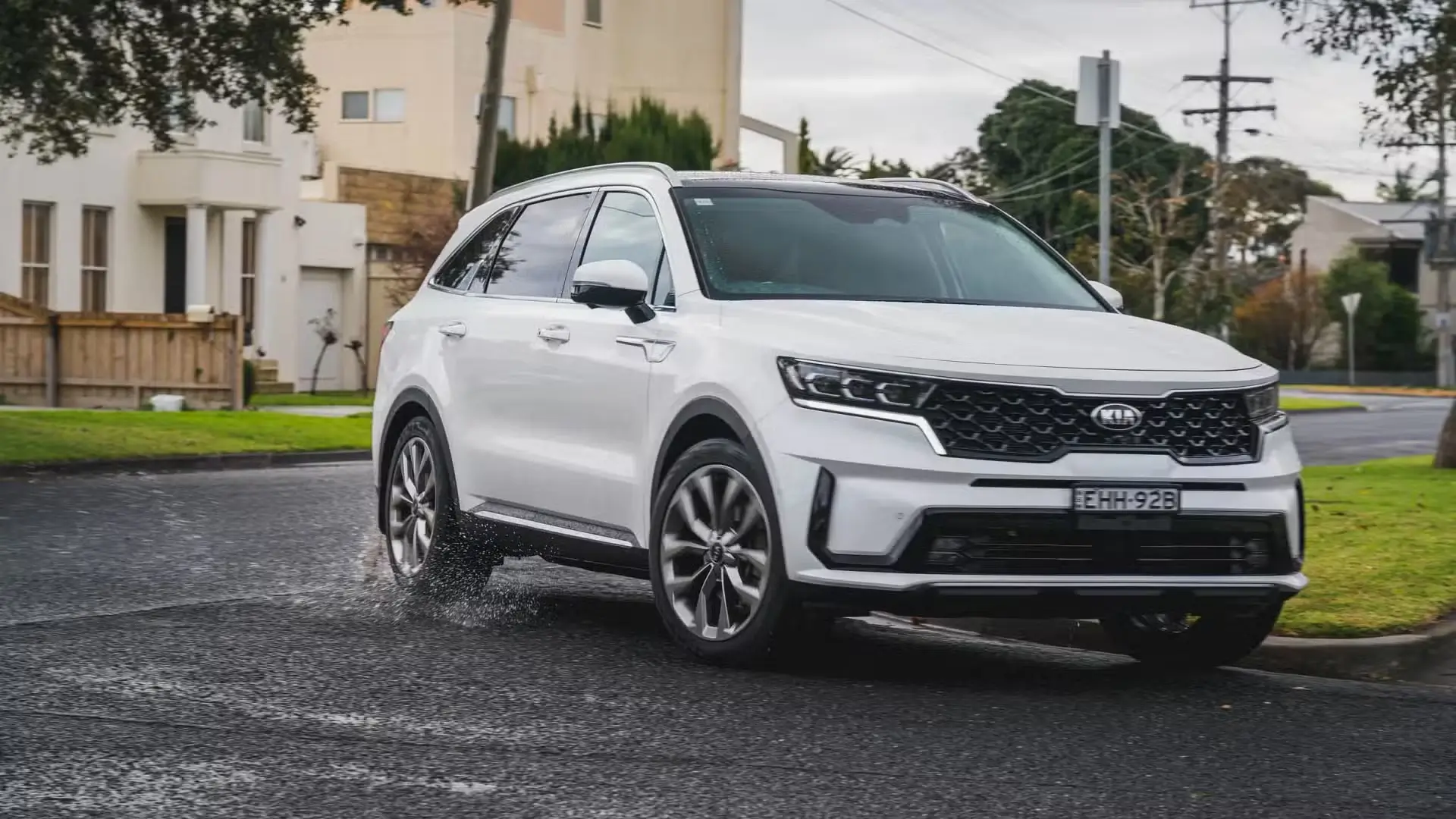
The 2021 Kia Sorento isn’t just a routine refresh, it’s the moment this nameplate graduates into the serious three-row conversation. Kia moved the Sorento onto a new-generation platform, sharpened the design into something more “rugged-crossover” than soft family hauler, and most importantly built a powertrain lineup that lets you choose your personality: efficient commuter, confident all-weather family shuttle, or surprisingly quick highway machine.
If you’re researching a 2021 Kia Sorento overview because you want a midsize SUV that can do school runs Monday to Friday and escape to the hills on the weekend, this model year is where Sorento’s value proposition becomes hard to ignore: strong tech, lots of safety assistance, and a menu of engines (including hybrid options) that many rivals simply don’t match at the same price point.
Design and platform: more SUV, less anonymous crossover
The fourth-generation Sorento leans into crisp lines, a more upright stance, and a cabin that looks and feels more premium than previous versions. Kia’s own press material calls out increased interior space and a new platform aimed at reducing weight while improving strength and refinement. In real terms, the Sorento feels like it’s been designed to compete with vehicles people actually aspire to own not just something you “end up with” because it fits the budget.
Powertrains: choose your flavor (and your fuel bill)
Kia’s biggest flex with the 2021 Sorento is the variety under the hood.
Base 2.5L four-cylinder (gas):
The standard engine is a 2.5-liter four-cylinder paired with an 8-speed automatic, rated at 191 hp and 181 lb-ft. It’s offered with front-wheel drive or all-wheel drive, making it the straightforward pick for buyers who want three-row practicality without chasing speed.
2.5L turbo (gas):
Step up to the turbo 2.5 and the Sorento turns into a very different vehicle. You get 281 hp and 311 lb-ft, paired with Kia’s 8-speed wet dual-clutch transmission, which is a big deal in this segment for responsiveness and punchy midrange pull—especially when merging, climbing, or passing on two-lane roads.
Hybrid (turbo + electric):
The Sorento Hybrid combines a turbocharged 1.6-liter and an electric motor for 227 hp, and multiple sources peg it at 37 mpg combined (with 39 city / 35 highway figures widely listed). It’s also notable for using a traditional automatic rather than a CVT, which some drivers find more natural in everyday driving.
Plug-in hybrid (PHEV):
If your daily driving includes lots of short trips and you can plug in at home, the plug-in route adds meaningful EV capability. The commonly cited figures are 261 hp combined and an EPA-rated 32-mile electric range (often discussed around the Sorento PHEV).
My personal rule of thumb: if you can realistically plug in most nights and your weekday driving is under 30 miles, a PHEV setup often feels like you’re “skipping” gas stations far more than you expect.
How the Sorento Fits Into Everyday Life
Picture a typical week: you’re doing school drop-offs, commuting, and squeezing groceries into the back—then Friday evening you’re loading up for a weekend trip where the roads might turn wet, steep, or broken near your destination. The Sorento’s pitch is that you don’t have to buy a giant SUV to handle that routine. The hybrid helps keep fuel costs sane on weekdays, the turbo gas engine gives you confident highway performance when the cabin is full, and the available AWD system is there for the messy-weather moments that turn “family road trip” into “family stress test.”
Interior and flexibility: smart packaging matters more than you think
The 2021 Sorento’s cabin is built around flexibility: available second-row captain’s chairs, usable tech, and enough charging options to keep a modern family from starting arguments over battery percentage. Kia specifically highlights available premium touches like a panoramic sunroof, Bose audio, and up to eight USB ports depending on configuration features that make long drives feel less like endurance events.
Practical note: in many three-row crossovers, the “third row” is technically present but realistically reserved for short trips. The Sorento is still in that world—think occasional-use third row rather than minivan replacement—but its overall packaging is competitive enough that many families can make it work if they’re honest about how often row three will be occupied.
Technology: the stuff you actually use
Kia leaned hard into screens and driver-assistance tech. Depending on trim, features can include a large infotainment display and advanced camera-based visibility aids (like surround-view and blind-view style camera support on certain configurations), aimed at reducing stress in tight parking and lane changes. Kia Media+1
Safety and driver assistance: strong standard baseline
This is another area where the Sorento’s story gets compelling. Kia notes that a broad set of advanced driver-assistance features is standard or widely available, including Forward Collision-Avoidance Assist, Lane Keeping Assist, and Rear Occupant Alert, with additional available features like blind-spot related interventions and safer-exit aids depending on trim.
(As always: these systems support the driver—they don’t replace attentive driving, especially in poor weather, heavy traffic, or unpredictable road conditions.)
Quick comparison: how the Sorento stacks up against common rivals
Below is a simple, buyer-focused snapshot. Exact trims vary widely by market, but this shows why the 2021 Sorento is often cross-shopped so aggressively.
| SUV (2021-era) | What it does best | Where Sorento can win |
|---|---|---|
| Kia Sorento (2021) | Powertrain choice (gas/turbo/hybrid/PHEV), modern tech | Best “mix-and-match” lineup for performance + efficiency Kia Media+1 |
| Toyota Highlander Hybrid | Reputation + efficiency, smooth family manners | Sorento often feels more feature-forward and offers a turbo feel in hybrid form (no CVT-style behavior) AP News |
| Honda Pilot | Space and easy-going V6 family utility | Sorento can feel more modern inside and offers hybrid/PHEV pathways Pilot lacks in that era |
| Hyundai Santa Fe | Value and comfort (but often 2-row focused depending on year/market) | Sorento gives you that extra row and a broader drivetrain menu |
| Mazda CX-9 | Driving dynamics and upscale feel | Sorento fights back with tech, efficiency options, and family-first versatility |
What makes the 2021 Sorento a smart pick (the “why this over everything else” part)
The unique edge here isn’t one single feature it’s the way Kia bundles a wide engine lineup, modern safety tech, and legit family usability into a package that doesn’t demand full-size-SUV compromises. Many competitors make you choose: you either get efficiency, or power, or tech, or three-row flexibility. The Sorento tries to let you pick two or even three without the price jumping into a different class.
Related: 2020 Kia Sorento Overview
Conclusion
The 2021 Sorento is the version that turns this model into a genuine contender. If you want the simplest ownership story, the standard gas engine is fine. If you value confident passing power and a more responsive feel, the 2.5 turbo is the one that changes the character of the SUV. And if fuel costs and daily efficiency matter most, the hybrid (or plug-in hybrid, if you can charge) makes the strongest long-term case. With strong available safety tech and a family-friendly cabin, the Sorento earns its place as one of the most well-rounded three-row crossovers of its time.
FAQs
Is the 2021 Kia Sorento a real three-row SUV or just “two rows plus extras”?
It’s a true three-row layout, but like most midsize crossovers, the third row is best for kids or occasional use. The value is having that flexibility when you need it.
Which engine is the best choice for most buyers?
If you drive a lot and want better efficiency, the hybrid’s 37 mpg combined reputation is compelling. If you regularly carry passengers and want stronger acceleration, the 281-hp turbo is the most satisfying.
Does the Sorento Hybrid feel underpowered?
Not necessarily—227 hp is competitive, and many reviewers note it behaves more naturally than hybrid SUVs that rely on CVT-like drivetrains.
What safety features are commonly included?
Expect widely available modern driver aids like forward collision-avoidance assistance, lane keeping support, and rear occupant alert, with higher trims adding more advanced blind-spot and safer-exit style features.
Is the plug-in hybrid worth it?
If you can charge at home and most weekday driving fits within the EPA-rated 32-mile electric range commonly cited for the Sorento PHEV, it can significantly reduce fuel use—while still giving you gas backup for road trips.