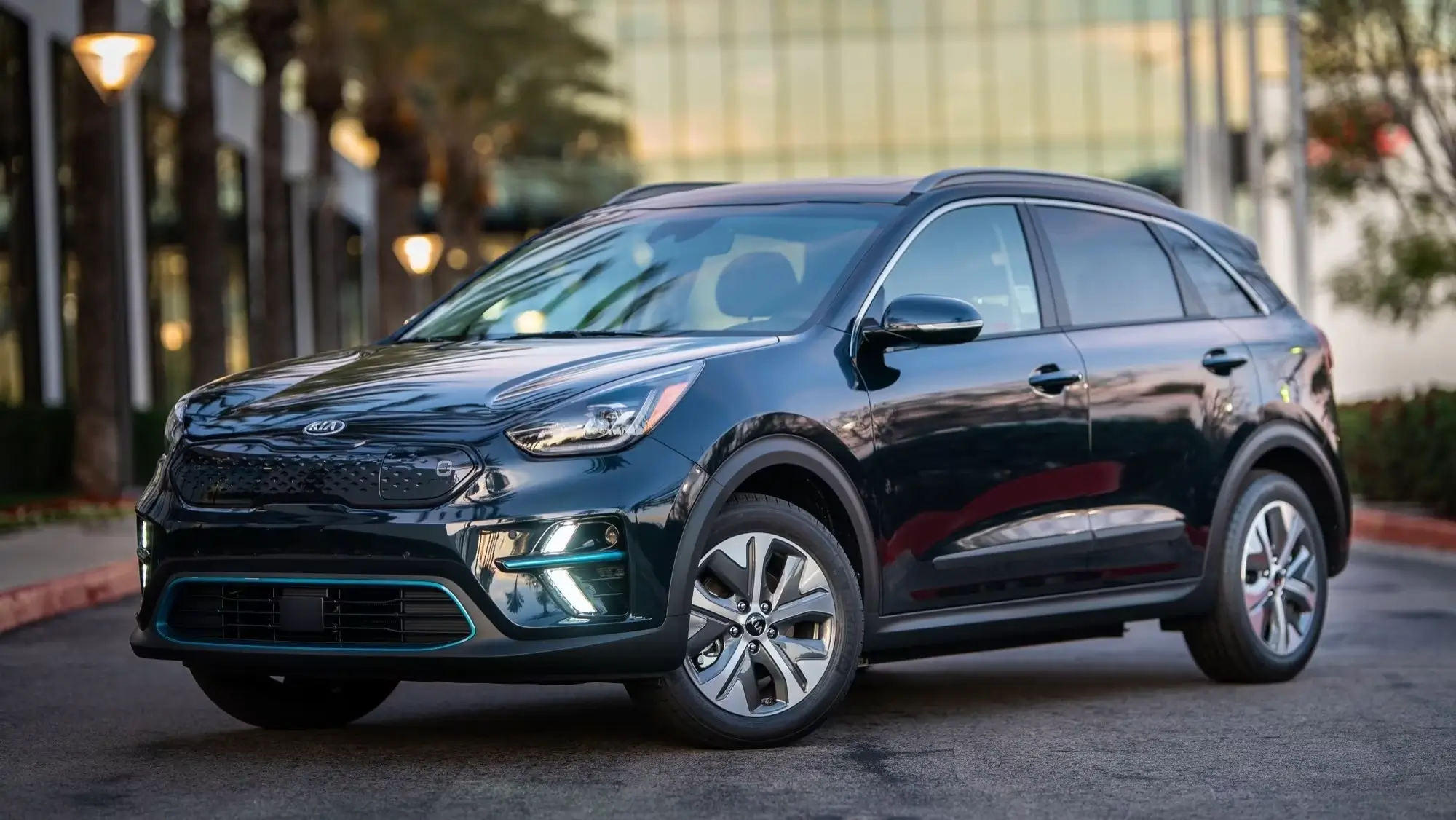
The shift toward electric vehicles didn’t truly feel practical for everyday Americans until models like the 2019 Niro EV arrived. Instead of forcing drivers to accept compromises, Kia built an all-electric crossover that feels familiar, useful, and surprisingly fun. It blends long driving range, strong performance, and crossover versatility into a package that still makes sense years after its release.
When this model first entered the U.S. market, it immediately stood out as one of the few affordable electric crossovers capable of replacing a gasoline vehicle without requiring major lifestyle adjustments. Even today, it remains a compelling used EV option for commuters and families alike.
Powertrain, Battery, and Real-World Performance
At the heart of this electric crossover is a 64-kWh lithium-ion polymer battery paired with a 150-kW electric motor producing 201 horsepower and 291 lb-ft of torque. Those numbers might look modest on paper, but electric torque delivers instant response the moment you press the accelerator.
In everyday driving, the acceleration feels smooth and confident rather than aggressive. Merging onto a busy California freeway or passing slower traffic doesn’t require planning ahead—it happens effortlessly.
The EPA-estimated 239-mile driving range was a major headline when this vehicle launched, and it remains highly competitive, especially considering its price point in the used market today.
Charging flexibility is another strong point:
- DC fast charging: Adds roughly 100 miles in about 30 minutes
- Level 2 home charging: Full recharge in around 9.5 hours
- Standard CCS charging port: Compatible with most public fast chargers in the U.S.
This means owners can comfortably use it for both daily commuting and occasional road trips.
Driving Feel and Everyday Usability
What makes this electric crossover special isn’t just efficiency—it’s how normal it feels. The battery is mounted under the floor, lowering the center of gravity and improving stability.
Kia also included adjustable regenerative braking controlled by steering-wheel paddles. This system allows drivers to slow down using the motor, recovering energy while reducing brake wear. With practice, many owners rely less on the brake pedal, especially in stop-and-go traffic.
I remember test-driving one in Southern California traffic and being surprised by how quiet and effortless it felt—it made rush-hour commuting feel far less stressful than in a traditional gas SUV.
Multiple driving modes—Eco, Normal, and Sport—let drivers prioritize efficiency or responsiveness depending on their needs.
Interior Comfort and Technology
Inside, the cabin feels modern without being overwhelming. Kia avoided unnecessary complexity, focusing instead on usability.
Key interior highlights include:
- Comfortable seating for five passengers
- Available leather upholstery in higher trims
- User-friendly infotainment system with touchscreen
- Apple CarPlay and Android Auto integration
- Wireless phone charging
- Digital instrument cluster displaying battery and energy usage
Cargo space is another strength:
- 18.5 cubic feet behind the rear seats
- Up to 53 cubic feet with seats folded
That’s enough for groceries, luggage, or weekend gear without difficulty.
The elevated seating position also improves visibility, which many drivers prefer over traditional sedans.
Safety and Driver Assistance
Kia equipped this model with a comprehensive list of safety features that still feel modern today.
Standard and available systems include:
- Forward collision warning
- Automatic emergency braking
- Blind-spot monitoring
- Lane-keeping assist
- Smart cruise control with stop-and-go
- Rear cross-traffic alert
These technologies help reduce driver fatigue, especially during longer highway trips.
Trim Levels and Feature Differences
The vehicle was offered in two main trims, each targeting slightly different buyers.
| Feature | EX | EX Premium |
|---|---|---|
| Battery & Range | 64 kWh / 239 miles | Same |
| Infotainment | 7-inch touchscreen | 8-inch touchscreen with navigation |
| Audio | Standard sound system | Harman/Kardon premium audio |
| Seats | Heated front seats | Heated and ventilated front seats |
| Sunroof | Not available | Standard |
| Interior Trim | Cloth or optional upgrades | Leather with premium accents |
The higher trim feels more upscale, but the base version still offers excellent value.
How It Compares to Similar Electric Crossovers
When evaluating this model, most buyers also consider other early mainstream EVs.
| Vehicle | Range | Horsepower | Cargo Space | Strength |
|---|---|---|---|---|
| Niro EV | 239 miles | 201 hp | 53 cu ft | Best balance of range & practicality |
| Chevrolet Bolt EV | 238 miles | 200 hp | Less cargo room | Lower price |
| Hyundai Kona Electric | 258 miles | 201 hp | Smaller interior | Longer range |
| Nissan Leaf Plus | 226 miles | 214 hp | Hatchback design | Smooth ride |
What makes the Kia stand out is its crossover shape, which offers more versatility than hatchbacks like the Leaf or Bolt.
How It Performs in Everyday Life
Imagine a commuter living in Orange County, California, driving 40 miles daily. With nearly 240 miles of total range, they only need to charge twice per week at home.
On weekends, they can drive to Los Angeles, run errands, and return without worrying about running out of power.
Gas stations become irrelevant, and operating costs drop dramatically.
Over time, the savings on fuel and maintenance add up significantly.
Design That Still Feels Modern
Unlike some early EVs that looked unusual, this model maintains a familiar crossover design.
Unique styling touches include:
- Closed front grille
- LED daytime running lights
- Aerodynamic wheels
- Blue accent trim
These subtle changes signal its electric identity without being excessive.
The result is a vehicle that still looks contemporary years later.
Ownership Costs and Long-Term Value
One of the biggest advantages is low operating cost.
Electric vehicles eliminate:
- Oil changes
- Spark plug replacements
- Transmission servicing
Electric motors have fewer moving parts, which reduces maintenance over time.
Battery durability has also proven reliable, and Kia provided strong warranty coverage.
For used buyers today, this makes it one of the smartest entry points into electric ownership.
Why This Model Still Makes Sense Today
Many electric vehicles released around 2019 struggled with limited range, slow charging, or cramped interiors.
This one avoided those issues by offering:
- Long driving range
- Practical crossover space
- Modern safety features
- Comfortable interior
- Affordable used pricing
It bridges the gap between early EV experimentation and modern electric practicality.
That balance is why it continues to hold strong appeal.
Related: 2026 Kia Niro Overview
Conclusion
The 2019 Kia Niro EV represents a turning point in affordable electric transportation. It delivered the range, practicality, and usability drivers needed to confidently switch from gasoline.
Instead of feeling like a compromise, it feels like a natural evolution of the compact crossover.
For commuters, families, or anyone entering the electric world for the first time, it remains one of the most sensible and well-rounded choices available.
Even years after its release, it proves that a well-designed electric vehicle doesn’t need to be flashy—it just needs to work well in everyday life.
FAQs
Is the 2019 model reliable?
Yes. Owners report strong reliability, and electric motors generally require less maintenance than gas engines.
How long does the battery last?
Most EV batteries are designed to last 10–15 years or longer, depending on usage and charging habits.
Is it good for road trips?
Yes. Its nearly 240-mile range and fast-charging capability make longer trips manageable with proper planning.
How much does it cost to charge?
Charging at home typically costs far less than gasoline, often equivalent to paying around $1–$2 per gallon in energy costs.
Is it better than the Chevrolet Bolt?
Both are excellent, but this model offers more cargo space and crossover practicality, making it better for families.