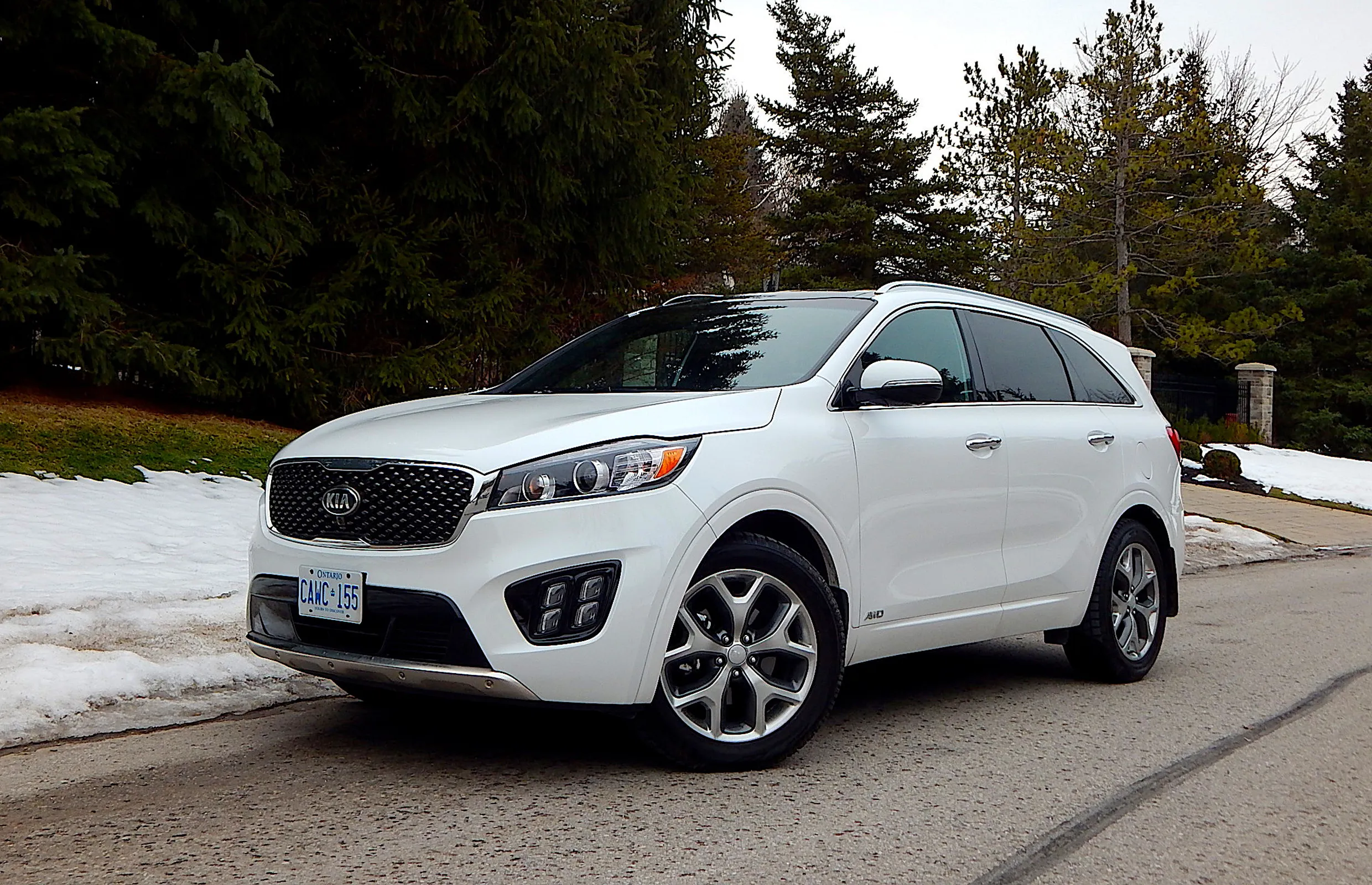
In the crowded midsize crossover space, few vehicles manage to balance family practicality, everyday comfort, and long-term ownership confidence as convincingly as the 2017 Kia Sorento. Entering its second year of the third-generation design, this model didn’t chase radical changes. Instead, it focused on refinement—adding smarter technology, expanding safety availability, and fine-tuning trim flexibility. The result is a crossover that feels thoughtfully evolved rather than hastily refreshed, appealing to buyers who value substance over spectacle.
Built at Kia’s U.S. manufacturing facility in West Point, Georgia, the 2017 Sorento reflects a more mature phase of the brand’s journey. It’s less about proving Kia can compete and more about quietly showing that it already does.
Design and road presence
At first glance, the Sorento doesn’t shout for attention—and that’s part of its appeal. The exterior design leans toward clean, confident lines rather than aggressive styling tricks. It fits just as comfortably in a suburban driveway as it does pulling up to a downtown office parking structure. Proportions are well judged, with a long wheelbase and balanced overhangs that contribute to both interior space and highway stability.
On the road, the Sorento feels planted and predictable. Steering is tuned more for confidence than sportiness, which suits its mission as a family-oriented crossover. Highway cruising is quiet, and suspension tuning does a commendable job absorbing broken pavement without feeling floaty. During a long intercity drive, I found the ride relaxed enough that fatigue set in much later than expected—a small but telling detail for anyone who spends real hours behind the wheel.
Interior comfort and everyday usability
Step inside, and the cabin reflects a clear emphasis on usability. Controls are logically placed, visibility is strong, and seat comfort stands out, especially on higher trims. Depending on configuration, buyers could opt for five- or seven-passenger seating, making the Sorento adaptable to different household needs.
Cargo flexibility is another strong suit. With rear seats folded, the Sorento easily handles bulky loads, from weekend hardware-store runs to family luggage for extended trips. In daily use, this translates into a vehicle that doesn’t require careful planning before loading—it simply works.
Technology also received meaningful attention for 2017. Smartphone integration via Android Auto and Apple CarPlay (available later in the model year) brought the infotainment system in line with modern expectations, reducing reliance on built-in navigation and making the cabin feel more current even by today’s standards.
Powertrain choices and real-world performance
One of the Sorento’s key strengths lies in its engine lineup, offering three distinct personalities depending on driver preference:
- A 2.4-liter four-cylinder producing 185 horsepower for efficiency-focused buyers
- A turbocharged 2.0-liter four-cylinder delivering 240 horsepower for a livelier feel
- A 3.3-liter V6 generating 290 horsepower for confident highway merging and towing needs
All engines are paired with a six-speed automatic transmission that prioritizes smoothness over aggressive shifting. In real-world driving, the turbocharged option strikes an appealing balance, offering strong midrange response without the fuel consumption penalty of the V6. The V6, however, remains the best choice for drivers who regularly carry full loads or prefer effortless power delivery.
Fuel economy figures remain competitive for the segment, especially considering the available all-wheel-drive configurations. While not class-leading, efficiency is consistent and predictable—qualities that matter more over years of ownership than headline numbers.
Safety and driver assistance progression
By 2017, safety had become a central purchasing factor, and Kia responded accordingly. Advanced driver assistance features, once reserved for luxury vehicles, were increasingly available across the Sorento lineup. Technologies such as autonomous emergency braking, forward collision warning, lane departure warning, and adaptive cruise control expanded beyond the top trim, allowing buyers to prioritize safety without automatically selecting the most expensive version.
This matters in real life. Imagine a daily commute involving stop-and-go traffic and unpredictable drivers. Features like autonomous emergency braking and blind-spot monitoring don’t just add peace of mind—they actively reduce stress during routine driving, which is where vehicles spend most of their lives.
Trim variety and value positioning
Rather than overwhelming buyers with cosmetic-only trims, the Sorento lineup is structured around meaningful differences in performance, features, and comfort. From the entry-level L model to the fully loaded SXL V6, the range allows buyers to choose based on actual needs rather than marketing labels.
To put this into perspective, here’s how the Sorento stacks up against two common midsize crossover rivals in terms of core attributes:
| Vehicle (2017) | Engine Power Range | Available Safety Tech | Seating Options | Overall Value Impression |
|---|---|---|---|---|
| Kia Sorento | 185–290 hp | Widely available across trims | 5 or 7 | Strong balance of features and price |
| Toyota Highlander | 185–295 hp | More restricted to higher trims | 7 or 8 | Reliable but higher cost for features |
| Ford Edge | 245–315 hp | Limited availability | 5 | Sportier, less family-focused |
What stands out here is how the Sorento democratizes features that competitors often reserve for premium trims, reinforcing its reputation as a value-forward choice without feeling budget-oriented.
Ownership perspective and long-term appeal
Beyond specifications, the Sorento’s appeal becomes clearer when viewed through an ownership lens. Maintenance costs remain reasonable, parts availability is strong, and Kia’s reputation for improving long-term durability plays a role in buyer confidence. This is a vehicle designed not just to impress on a test drive but to remain dependable after years of school runs, road trips, and daily commuting.
For families upgrading from a compact SUV or downsizing from a larger three-row vehicle, the Sorento occupies a practical middle ground. It offers space without excess, technology without complexity, and performance without unnecessary expense.
Related: 2016 Kia Sorento Overview
Conclusion
The 2017 Kia Sorento succeeds by focusing on what matters most to real drivers. It doesn’t rely on flashy redesigns or headline-grabbing gimmicks. Instead, it delivers a well-rounded package built around comfort, safety, and everyday usability. With multiple engine choices, flexible seating, and an expanded suite of driver assistance features, it remains a compelling option for buyers seeking long-term value in the midsize crossover segment. Years later, its balanced approach still explains why so many Sorentos remain on the road—and in family driveways—today.
FAQs
Is the 2017 Sorento suitable for families?
Yes. With available third-row seating, strong safety features, and ample cargo space, it’s well-suited for family use.
Which engine option is best for daily driving?
The turbocharged 2.0-liter engine offers a good mix of responsiveness and efficiency, making it a popular all-around choice.
Does it support modern smartphone connectivity?
Yes. Android Auto and Apple CarPlay were introduced during the 2017 model year, enhancing infotainment usability.
How does it perform in winter conditions?
With available all-wheel drive and stability-focused tuning, the Sorento handles snow and wet conditions confidently when equipped with proper tires.
Is it still a good used-car option today?
Absolutely. Its combination of reliability, safety features, and reasonable ownership costs makes it a strong contender in the used midsize SUV market.