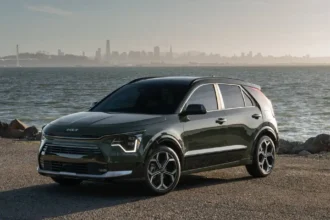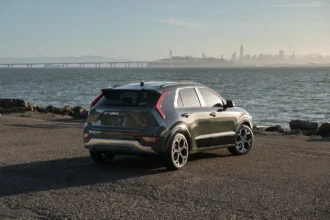
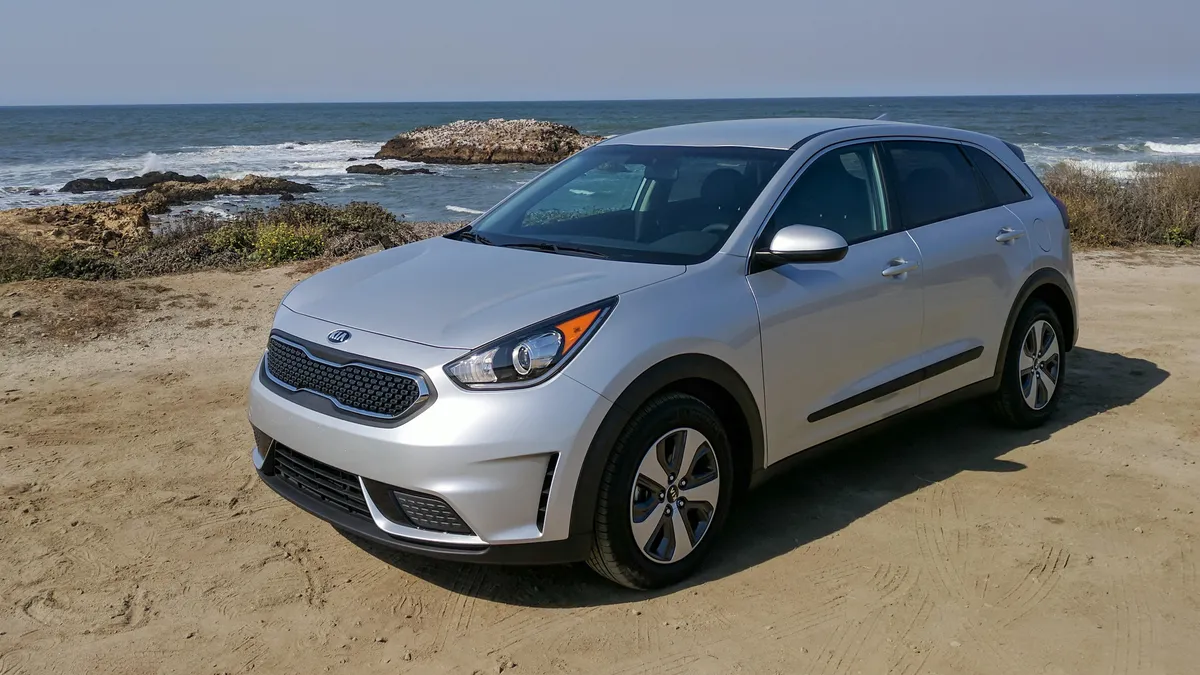
When the 2017 Kia Niro arrived in U.S. showrooms, it didn’t just join the hybrid conversation, it quietly reshaped it. Instead of building another wedge-shaped eco car, Kia engineered a purpose-built hybrid crossover that looked and drove like a traditional compact utility vehicle. For American drivers who wanted SUV practicality without sacrificing fuel economy, the Niro landed squarely in the sweet spot.
At its core, the 2017 model introduced a new direction for the brand’s eco lineup. Unlike converted gas models retrofitted with electric components, this crossover was designed from the ground up around a dedicated hybrid platform. That decision shows up everywhere—from interior packaging to weight balance and road manners.
Powertrain and Performance: Hybrid Without the Hybrid Feel
Under the hood, the Niro pairs a 1.6-liter GDI four-cylinder engine operating on the Atkinson cycle with a 43-horsepower electric motor. Combined output stands at 139 horsepower and 195 lb-ft of torque. On paper, that may not sound thrilling, but the torque delivery feels responsive in daily driving—especially off the line in city traffic.
What truly separates this model from many competitors is its 6-speed dual-clutch transmission (DCT). While most hybrids rely on continuously variable transmissions (CVTs), the Niro uses a traditional-style gearbox. The result is a driving experience that feels familiar and more connected, without the droning effect often associated with CVTs.
In everyday commuting—whether merging onto an interstate or navigating suburban stop-and-go traffic—the power delivery is smooth and predictable. During my own extended test drive on a mixed city/highway loop, I was surprised at how little I noticed the hybrid system at work; it simply behaved like a refined compact crossover.
Acceleration from 0–60 mph takes roughly 10 seconds, so this isn’t a performance crossover. But it wasn’t designed to be one. Instead, it excels in consistency, efficiency, and composure.
Fuel Economy That Changes the Math
Fuel efficiency is where the Niro truly defines its value. EPA estimates vary by trim:
- FE Trim: 52 city / 49 highway / 50 combined MPG
- LX and EX: 51 city / 46 highway / 49 combined MPG
- Touring: 46 city / 40 highway / 43 combined MPG
For context, that level of efficiency rivals traditional hybrid hatchbacks while offering crossover ride height and cargo flexibility. For drivers covering 15,000 miles annually, the fuel savings compared to a conventional compact SUV can translate into significant long-term cost reductions.
Imagine a daily commuter in Southern California driving 60 miles round-trip. Instead of filling up every few days, they might stretch fuel stops to once a week or more—without giving up seating space for passengers or gear.
Smart Packaging and Interior Comfort
The 2017 Niro rides on a 106.3-inch wheelbase, which allows for impressive cabin space relative to its footprint. Passenger room is generous for both rows, and the hybrid battery placement under the rear seat preserves interior usability.
Cargo space measures 19.4 cubic feet behind the second row, expanding significantly when seats are folded flat. While slightly less than some larger compact crossovers, it remains practical for groceries, luggage, and weekend equipment.
The cabin design leans clean and functional. Controls are logically placed, and upper trims add soft-touch materials and metallic accents that elevate the feel. Road and wind noise are well controlled thanks to acoustic windshield glass and structural insulation enhancements.
Technology was forward-thinking for its time. Standard features include:
- 7-inch touchscreen display
- Apple CarPlay and Android Auto compatibility
- UVO infotainment system
- Available Harman Kardon premium audio
- Optional navigation with predictive energy management features
For a 2017 model year vehicle, smartphone integration as standard equipment was a competitive advantage.
Safety and Driver Assistance
The structure uses more than 50% Advanced High Strength Steel, improving rigidity and crash protection. Available driver assistance technologies include:
- Autonomous Emergency Braking
- Blind Spot Detection
- Rear Cross Traffic Alert
- Lane Departure Warning
- Smart Cruise Control
While not every trim includes these systems as standard, higher trims deliver a strong safety portfolio consistent with modern expectations.
Trim Comparison at a Glance
Here’s how the primary trims stack up:
| Feature | FE | LX | EX | Touring |
|---|---|---|---|---|
| Combined MPG | 50 | 49 | 49 | 43 |
| Wheels | 16-inch aero | 16-inch alloy | 16-inch alloy | 18-inch alloy |
| Apple CarPlay / Android Auto | Standard | Standard | Standard | Standard |
| Smart Cruise Control | — | Available | Available | Available |
| Blind Spot Detection | — | Available | Standard (EX Premium) | Standard (Touring Tech) |
| Sport Mode | Yes | Yes | Yes | Yes |
The FE trim maximizes efficiency, while Touring variants emphasize style with larger wheels and sportier design cues—though at the cost of fuel economy.
Daily Driving and Lifestyle Fit
Consider a young family in Chicago looking for a vehicle that can handle school drop-offs, grocery runs, and occasional road trips. A traditional SUV offers space but comes with higher fuel bills. A compact hybrid sedan saves fuel but lacks cargo flexibility. The Niro fits right in between—offering elevated seating, hatchback practicality, and hybrid efficiency in one balanced package.
That balance is what makes it compelling even years after its launch.
How It Compares to Rivals
In 2017, primary competitors included the Toyota Prius, Toyota Prius v, Hyundai Ioniq Hybrid, and Honda HR-V.
- Versus Toyota Prius: The Prius delivers comparable efficiency but in a more polarizing design with lower ride height.
- Versus Honda HR-V: The HR-V offers more cargo space and available AWD, but fuel economy trails significantly.
- Versus Hyundai Ioniq: The Ioniq edges slightly higher in MPG but lacks crossover styling and utility.
The Niro carved out a niche: it provided hybrid savings in a form factor Americans already preferred.
Strengths and Limitations
What It Does Well:
- Outstanding fuel economy for a crossover
- Traditional transmission feel
- Comfortable ride quality
- Practical cabin layout
- Strong technology integration
Where It Falls Short:
- No all-wheel drive option
- Modest acceleration
- Some hard interior plastics in lower trims
- Cargo space slightly below larger compact SUVs
Long-Term Value
Kia’s reputation for reliability and warranty coverage adds confidence for pre-owned buyers today. The hybrid system’s lithium-ion polymer battery is compact and efficient, and owner reports over the years have generally highlighted dependable performance.
For budget-conscious buyers entering the used hybrid market, the 2017 model often represents a lower purchase price compared to equivalent Toyota hybrids while offering similar real-world efficiency.
The bigger picture is this: it delivers SUV practicality without demanding SUV fuel costs. That positioning still feels relevant.
Related: 2026 Kia Seltos Overview
Conclusion
The 2017 Kia Niro stands as a pivotal model in the evolution of hybrid crossovers. It successfully bridged two worlds—traditional utility and advanced hybrid efficiency—without forcing drivers to compromise on design or everyday usability.
It may not be the fastest or most luxurious compact crossover of its era, but it delivers where it matters most: cost-effective operation, functional space, and a driving experience that feels refreshingly normal for a hybrid.
For commuters, small families, and efficiency-focused drivers who don’t want a futuristic-looking hatchback, this crossover remains one of the smartest entries in the segment.
FAQs
Is the 2017 Kia Niro reliable?
Owner feedback and industry data suggest strong reliability for the powertrain and hybrid system, especially when properly maintained.
Does the 2017 Niro offer all-wheel drive?
No, it is front-wheel drive only.
How long does the hybrid battery last?
Hybrid batteries are designed for long-term use, often lasting well beyond 100,000 miles with normal driving conditions.
Is it good for highway driving?
Yes. While acceleration is moderate, it maintains highway speeds comfortably and delivers excellent fuel economy.
What makes it different from the Toyota Prius?
The Niro offers a crossover body style with higher seating and a conventional 6-speed transmission, creating a more traditional driving feel.