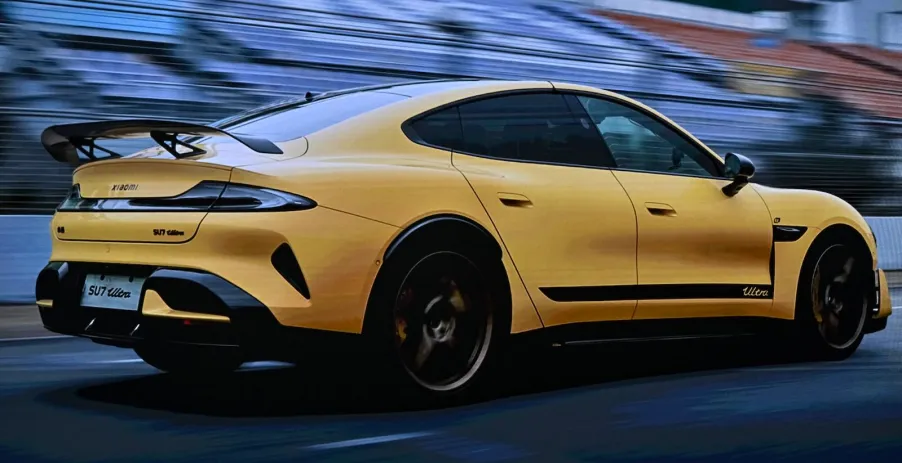
If “four digits of power” is your starting point, your options have never been better or more complex. This buyer’s guide compares today’s 1,000+ horsepower cars from record-shattering EV sedans to ethanol-fueled drag monsters and seven-figure hypercars, and breaks down real-world use cases, ownership costs, and who each one actually suits. We cite official specs and instrumented tests so you can shop with confidence.
Hypercar, Megacar, or Just… Mega Power?
Hypercar” has become shorthand for the most extreme road cars. “Megacar” is a term Koenigsegg coined for vehicles producing at least one megawatt (1,000 kW), roughly 1,341 hp—the One:1 was the first “production megacar.”
In practice, you’ll find three broad categories above 1,000 hp:
- Street-legal super sedans (EV): Daily-driveable, quick-charging, often AWD and torque-vectoring.
- Muscle & track-specials (ICE or hybrid): Drag-strip terrors or lap-time hunters, sometimes fuel-dependent for peak output.
- Hyper/megacars (EV, hybrid, or ICE): Limited builds, extreme price tags, and headline numbers.
Street-Legal 1,000+ HP Cars You Can Actually Buy (or Order) in the U.S.
| Model (2025 U.S.) | Power (hp) | Drivetrain | Headline Capability | Street-Legal? | What It’s Best At |
|---|---|---|---|---|---|
| Lucid Air Sapphire | 1,234 | Tri-motor AWD (EV) | Super-sedan with 400+ mile EPA est. range | Yes | Daily use + track days; balanced range/performance. |
| Tesla Model S Plaid | ~1,020 | Tri-motor AWD (EV) | Stupid-quick 0–60; verified instrumented tests | Yes | High-value entry to four-digit power; drag runs. ( |
| Porsche Taycan Turbo GT | 1,019 (overboost) | Dual-motor AWD (EV) | Record-pace laps; ultrafast DC charging | Yes | Track pace + charging speed on road trips. |
| Dodge Challenger SRT Demon 170 | 1,025 (E85) | RWD (ICE, supercharged V8) | 8.91-sec ¼-mile; 1.66-sec 0–60* | Yes | Drag strip dominance; collectible last-call muscle. |
| Rimac Nevera | 1,914 (std) | Quad-motor AWD (EV) | 412 km/h (258 mph) top speed; multi-record holder | Yes | Ultimate EV performance; tech showcase. |
| Bugatti Tourbillon (revealed) | ~1,800 (hybrid V16+e-motors) | AWD hybrid | Successor to Chiron with 1,000-hp NA V16 + 800 hp e-assist | Yes | Bespoke hypercar craft; long-term halo ownership. |
Manufacturer and independent figures cited where available; real-world results vary with conditions, tires, and prep.
The Shortlist: Specs, Pros/Cons, and Use-Cases
Lucid Air Sapphire (EV, 1,234 hp)
- Why it matters: Three-motor torque vectoring and a claimed EPA range north of 400 miles make it the most complete “everyday 1,000-hp” sedan. Edmunds
- Pros: Roomy, refined ride, massive power with real range; strong track composure for a big sedan.
- Cons: Limited dealer footprint; options and carbon-ceramic brakes add cost.
- Best for: Luxury EV buyers who want P100D shock with grand-touring polish.
Tesla Model S Plaid (EV, ~1,020 hp)
- Why it matters: Still the most accessible way to join the four-digit club; independent testing confirms the absurd acceleration. Car and Driver
- Pros: Value vs. performance ratio; dense Supercharger network; simple ownership.
- Cons: Fit/finish variability; track endurance relies on prep and brake upgrades.
- Best for: Straight-line thrills, long highway slogs with fast charging.
Porsche Taycan Turbo GT (EV, 1,019 hp overboost)
- Why it matters: Delivers not just numbers, but repeatable track performance and class-leading DC fast-charging in third-party testing.
- Pros: Driver confidence, heat management, and charging speed; Porsche chassis tuning.
- Cons: Price climbs with Weissach-style weight-savings; tighter rear space.
- Best for: Lap-time chasers who actually track their EV—and need the fastest possible pit-stop charge.
Dodge Challenger SRT Demon 170 (ICE, 1,025 hp on E85)
- Why it matters: The closing chapter of the modern HEMI era hit four digits from the factory and rewrote drag-strip expectations.
- Pros: Factory-warranted brutality; culture and collectibility; turnkey 8-second potential.
- Cons: Peak output depends on fuel (E85); traction and tire management rule your life.
- Best for: Quarter-mile purists and muscle-car collectors who want the last word from Dodge.
Rimac Nevera (EV, 1,914 hp)
- Why it matters: A technology lighthouse—quad motors, torque vectoring, and relentless thermal management enabled the car’s record blitz.
- Pros: Engineering tour de force; boutique build quality; once-in-a-generation performance.
- Cons: Seven-figure pricing; ultra-limited servicing network.
- Best for: Ultra-high-net-worth buyers who want the tip of the spear in EV performance.
Bugatti Tourbillon (Hybrid, ~1,800 hp total)
Best for: Collectors seeking long-term provenance.
Why it matters: A clean-sheet V16 paired with a tri-motor hybrid system; a new era beyond the W16. Official figures cite 1,000 hp from the NA V16 plus 800 hp from the electric side.
Pros: Bespoke materials and design; monumental power with analog-leaning cockpit.
Cons: Allocation and cost; multi-year wait typical.
Hypercars vs. Megacars: What’s the Difference?
- Hypercars: A broad label for the most extreme performance cars, often limited-production and cutting-edge.
- Megacars: Cars producing ≥1 MW (~1,341 hp). The Koenigsegg One:1 established the term and target. If you want a tidy dividing line above “hyper,” megacar status is a useful shorthand.
EV vs. ICE at 1,000+ HP: Ownership Realities
Thermal & Repeatability: Modern EVs can repeat launches/laps better than early EVs thanks to advanced cooling. Porsche’s Turbo GT in particular pairs performance with exceptional DC fast-charging measured independently—useful for track days and road trips.
Fuel & Output: With the Demon 170, fuel choice matters—E85 unlocks the full 1,025 hp; 91-octane produces much less. Budget for E85 availability (and consumption) if you want max numbers.
Insurance & Maintenance: EV drivetrains reduce routine service, but performance tires, brakes, and potential carbon-ceramic options are big-ticket items across the board. ICE drag specials eat consumables quickly and may need frequent alignment/tire replacements.
Resale: Limited-run models (Rimac, Bugatti, final-year muscle) typically retain or appreciate—condition and originality are everything.
Practical Steps / Checklist
- Define your use case first. Daily commute + weekend canyons? Track days? Quarter-mile slips? Your answer decides EV vs. ICE and chassis setup.
- Map the energy plan.
- EV: Know your DC fast-charging corridor and home charging capacity (e.g., 240V/48–80A).
- ICE: Check E85 availability if you’re eyeing Demon-spec power.
- Spec the brakes and tires wisely. Carbon-ceramics, endurance fluid, and track-rated tires pay dividends if you’ll run lapping sessions.
- Budget for consumables. Four-digit power devours rubber; plan multiple sets per season if you track/drag.
- Get a pre-buy inspection (PPI). For low-volume hypercars, use a factory-trained specialist.
- Plan financing & insurance early. Some lenders and carriers have specialized programs for exotics and collector cars; lock these before allocation.
Common Mistakes & How to Avoid Them
- Chasing the biggest number without a plan. A 1,900-hp Nevera is wastage if you’ll never leave city streets. Be honest about usage.
- Ignoring the charging/fueling reality. If you lack fast charging access (or E85 in your area), you won’t see the headline performance consistently.
- Overlooking brakes/tires. Four-digit horsepower magnifies the importance of stopping power and grip—don’t skimp.
- Not verifying claims. Use official specs and instrumented tests when comparing. We’ve linked both throughout.
Related: Model 3 vs. Model Y: Which Tesla Fits Your Life and Budget
FAQ
Q1: Are there truly street-legal cars with over 1,000 horsepower I can daily-drive?
A: Yes. The Lucid Air Sapphire and Tesla Model S Plaid are fully street-legal, proven, and usable daily. The Lucid even pairs its power with a long EPA-estimated range.
Q2: What’s the current benchmark EV sedan for both lap pace and charging?
A: The Porsche Taycan Turbo GT is a standout—third-party testing measured extraordinary DC fast-charging performance, and its track credentials are well documented.
Q3: Do I need special fuel to reach 1,000+ hp in some cars?
A: Yes. The Demon 170 requires E85 to hit the full 1,025 hp. On 91-octane, output drops significantly.
Q4: What’s a “megacar,” and does it change how I should shop?
A: “Megacar” denotes ≥1 megawatt (~1,341 hp). It’s a bragging right more than a shopping category; focus on intended use and support network instead.
Q5: Which EV holds the wildest top-end numbers?
A: The Rimac Nevera posts a manufacturer-stated 258 mph top speed and a 1.4 MW (1,914-hp) output per its official spec sheet.
Q6: What about upcoming ultra-exotics?
A: Bugatti Tourbillon ushers in a new V16 hybrid era with a combined ~1,800 hp (official). Allocations are limited and pricing is in the multi-millions.
Conclusion
At the 1,000-horsepower threshold, numbers are table stakes—use case is everything. If you want everyday super-sedan speed with minimal compromise, Lucid Air Sapphire and Model S Plaid are your pragmatic entries. If you’ll run set after set of hot laps and need the quickest possible pit-stop charge, the Taycan Turbo GT is the sharp tool. If your aim is ultimate EV performance, the Rimac Nevera stands apart. And for the last word in factory-warranted American muscle, the Demon 170 remains unmatched—provided you feed it E85.
Begin with how you’ll actually drive, then layer in charging/fuel realities, consumables, service access, and resale goals. That approach will get you a four-digit monster that’s not just fast on paper—but perfect for the life you’ll live with it.